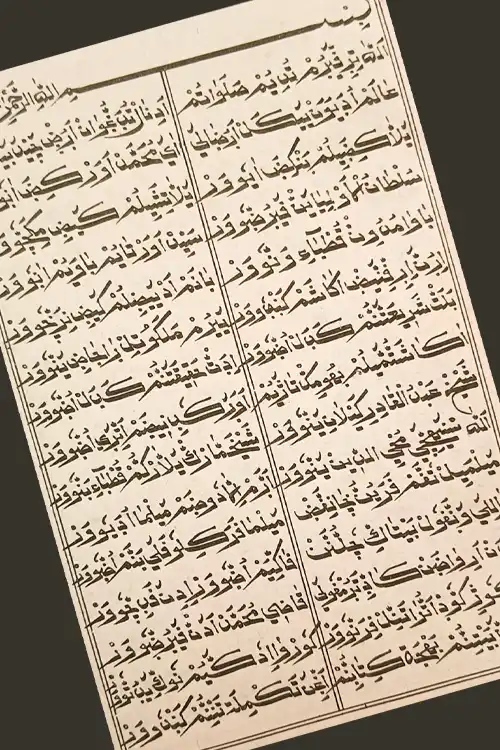
One of the pioneering figures in this movement was Theeputhil Kunhahammad from Thalassery, who is credited with introducing the printing press for Arabi Malayalam literature.He learned printing techniques from the Basel Mission and established the first Arabi Malayalam press in the region.This innovation was a milestone for the Mappila Muslim community, allowing them to preserve their oral literary traditions and make them available in printed form for future generations.
Printed Arabi Malayalam books and texts became more widely available to the general public, breaking the limitations imposed by the oral tradition.Poetry, historical works, religious texts, and stories were printed and circulated, reaching a much broader audience, including those in rural and remote areas of Kerala.
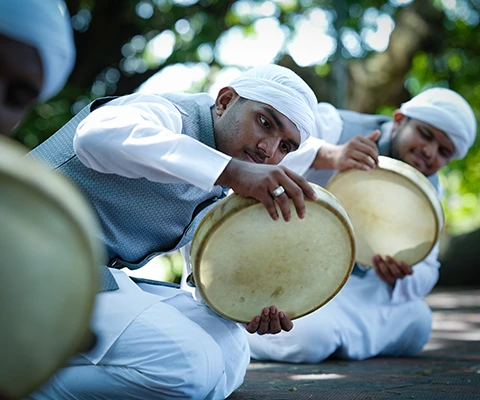
Mappila songbooks, often in rectangular form, are referred to as Sabeena songs.These compositions were traditionally written in Malabari Arabic script, following the Arabi Tamil style.The word Sabeena is derived from Safeena, meaning boat, because the shipmen used to keep this book for recitation during their journey.During marriage ceremonies, both male and female singers performed the Mappila songs with great enthusiasm, often engaging in competitive exchanges of poetic verses.Performers used areca leaf fans and drummed on spittoons (kolambi) to create rhythmic accompaniments, sometimes incorporating symbolic gestures and synchronized clapping.