Karkidaka Vavu Bali
Honouring Ancestors in Kerala’s Ritual Tradition
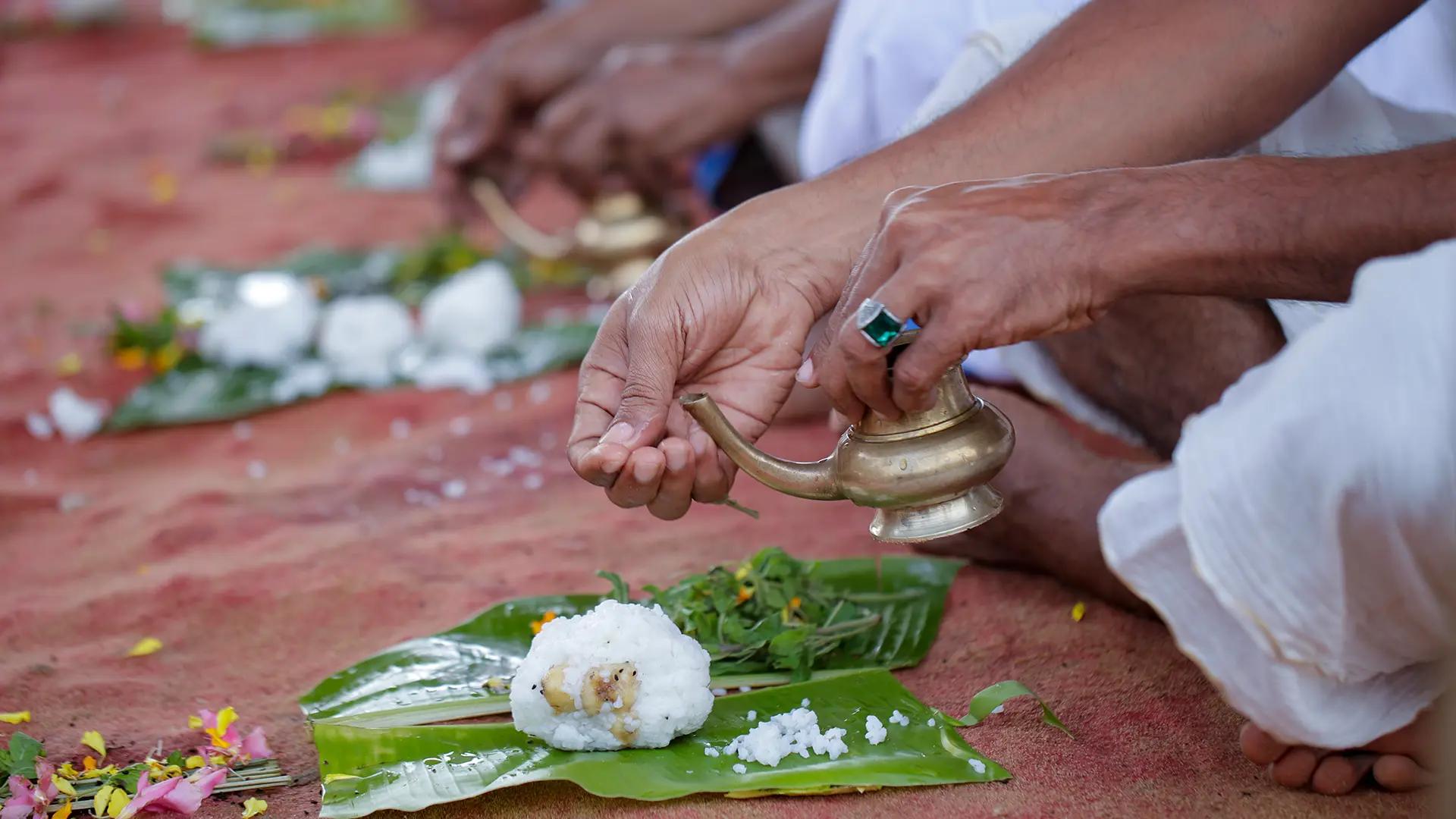
On Karkidaka Vavu, the last new moon day of the Malayalam month of Karkidakam, men dressed in crisp white dhotis assemble in orderly rows on temple grounds and riverbanks across Kerala. Seated close together, they prepare for bali which is the ritual of honouring departed ancestors. Each participant places a fresh banana leaf before him, carefully arranging rice balls, grains of white rice, sesame seeds, and leaves in neat rows, following ancient customs passed down through generations.
A brass pot that gleams in the morning light, rests in each hand, from which holy water is poured in slow, measured streams as part of the tarpanam. The water, flowing steadily over the rice offering, symbolizes prayers and remembrance, believed to reach ancestors in the afterlife. Petals and ritual leaves scattered alongside add colour to the otherwise austere scene, infusing the act with a sense of sacredness.
There is a deep sense of reverence as each person focuses inward, repeating mantras and performing the prescribed gestures with care and devotion. The air is filled with the soft rustle of dhotis and the faint scent of wet earth, mingling with the rhythmic chanting of priests who guide the rituals. The entire ceremony radiates a quiet dignity, connecting the living with those who came before, and reaffirming the cycle of remembrance at the heart of Kerala's cultural identity.