Loading...
Loading...
Loading...
Loading...
Loading...
Loading...
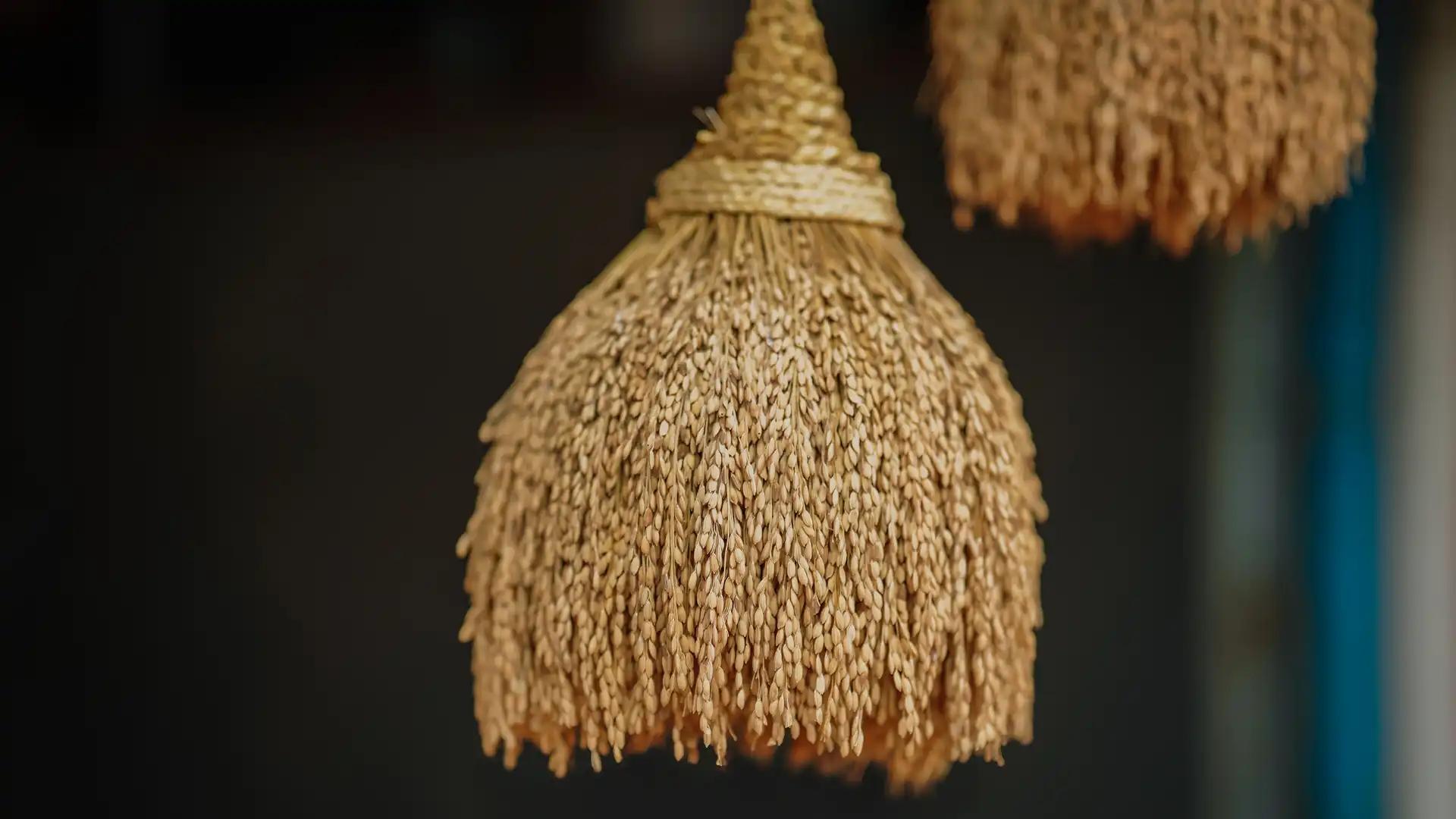
A bundle of ripened paddy, a bundle of blessings
Kathirkula, crafted from golden sheaves of paddy, is a cultural emblem that carries blessings of abundance, fertility, and prosperity. In Kerala, the sight of kathirkula, a bunch of ripened paddy sheaves bound neatly together, immediately evokes the essence of harvest and tradition. It is often gifted or displayed as a symbol of prosperity, embodying the blessings of a good yield and the promise of abundance. More than a decorative piece, the kathirkula holds deep cultural meaning, reflecting the intimate connection between people and the land they cultivate.
The practice of preserving paddy sheaves is rooted in Kerala's agrarian heritage, where rice cultivation has long been central to livelihood and rituals. After the harvest, the finest stalks are carefully selected, dried, and tied together into a tight bundle. The golden hue of the grains glistens under light, resembling a natural ornament shaped by the soil itself.
Traditionally, kathirkula is hung in homes, shops, and even vehicles, believed to invite prosperity, ward off scarcity, and remind people of their dependence on nature's cycles.
In recent years, Kathirkula has also emerged as a sought-after souvenir, especially for those visiting God's Own Country during festivals like Onam, the harvest festival of Kerala. Tourists carry it home not merely as a curio but as a living symbol of Kerala's agricultural roots and cultural richness. For the local community, it remains a cherished reminder of gratitude and reverence towards the land.
Also, do not miss out on these


