Loading...
Loading...
Loading...
Loading...
Loading...
Loading...
Loading...
Loading...
Loading...
Loading...
Loading...
Loading...
Loading...
Loading...
Loading...
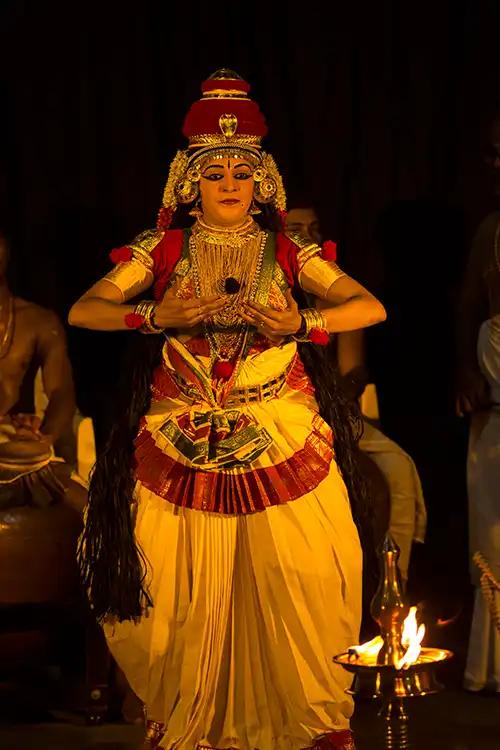
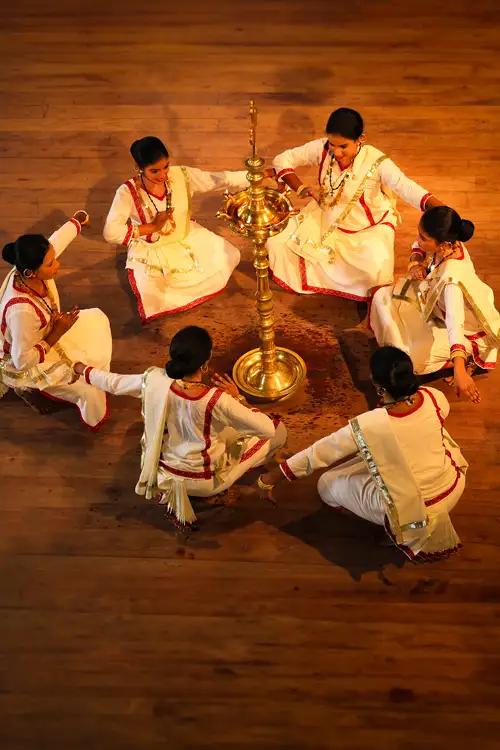
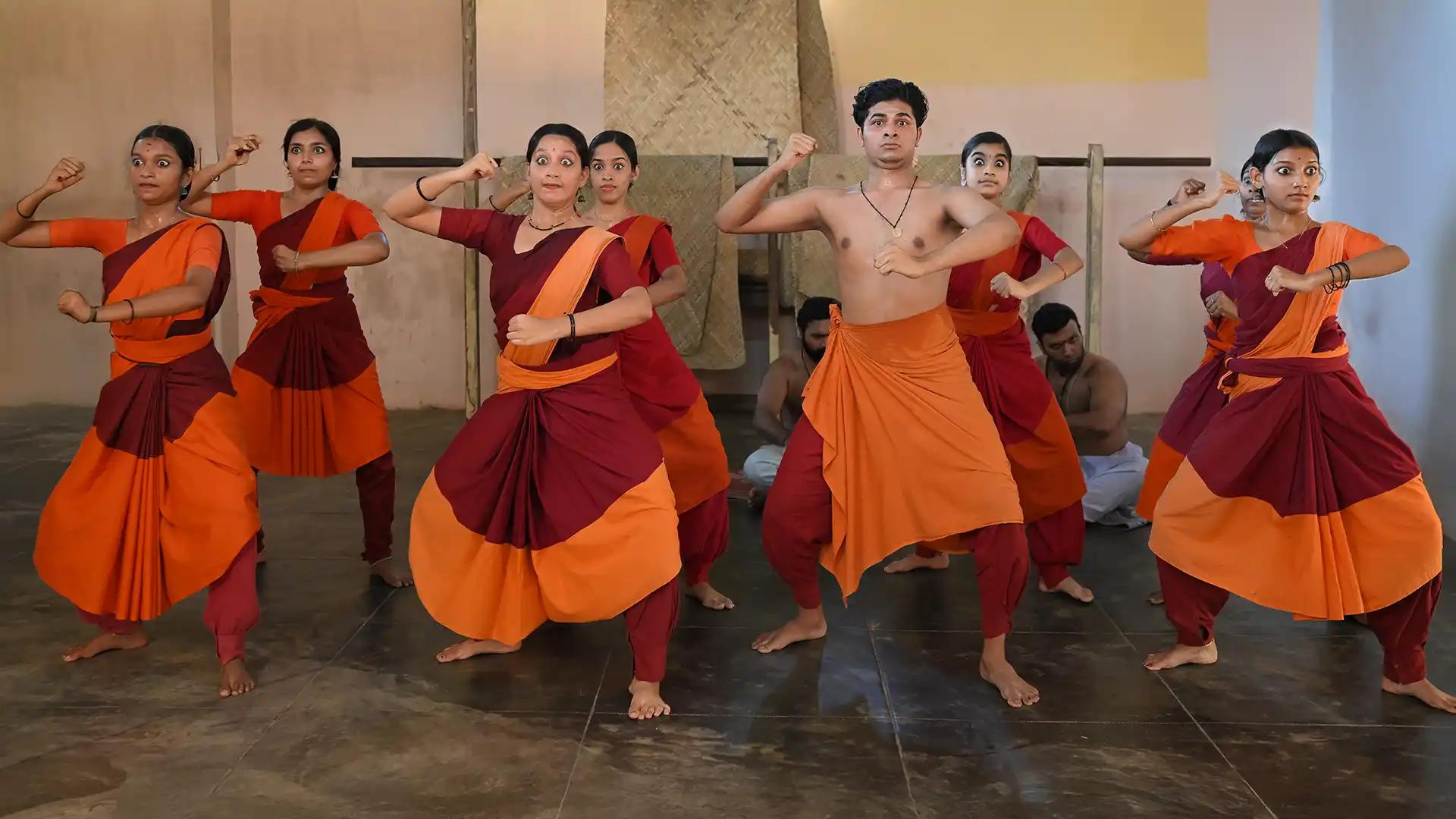
A vivid scene unfolds at Kerala Kalamandalam as rows of dedicated students practice Kutiyattam, the only surviving form of traditional Sanskrit theatre in India. Under the guidance of seasoned gurus, these young artists delve into a performance tradition that is both deeply ritualistic and rich in theatrical complexity; a legacy handed down through generations and carefully preserved within the walls of this renowned institution.
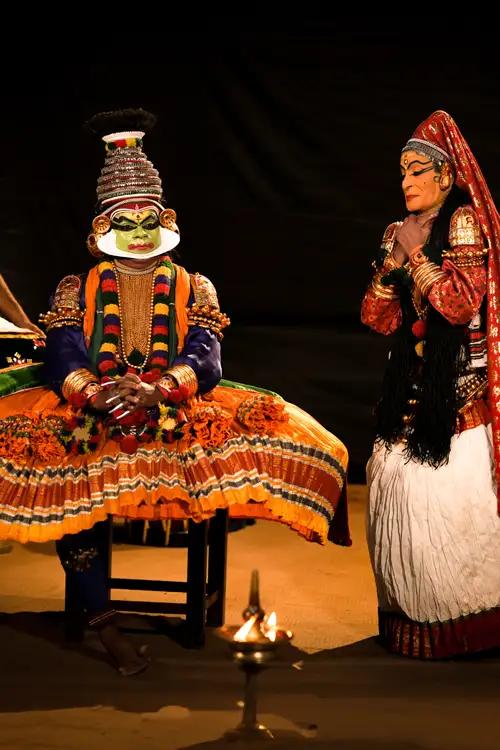
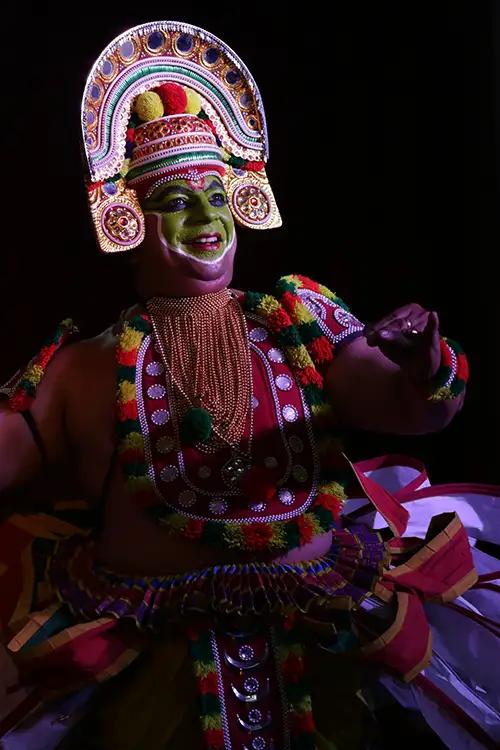
Kutiyattam, literally meaning "Combined Acting," is a centuries-old art form that integrates a range of dramatic techniques detailed in the Natyasastra, the classical treatise on Indian performance. Training at Kalamandalam introduces students to the four-fold concept of acting: Angika (movement of the body and limbs), Vachika (verbal expression), Satwika (emotional resonance) and Aharya (costume and makeup). Each class weaves together elements from these domains, allowing students to embody characters from legendary Sanskrit plays, including works by Kulasekhara Varman, Sree Harsha, Bhasa and others.
The mastery of Kutiyattam lies not only in individual expression but also in the collaborative spirit of performance. Students learn to execute complex stage techniques, such as pakarnnattam, where a single performer shifts between multiple roles through nuanced changes in posture, costume or spatial orientation. As they rehearse, the collective rhythm of their movements echoes the tradition's origins, where Chakyars and Nangyars once performed together to the resonant beats of the mizhavu drum.
At Kalamandalam, students also study the traditional theatre manuals Aattaprakaram and Kramadeepika, which outline everything from choreography to stage setup and remuneration. Teachers instill an appreciation for narrative techniques like anukramam (reverse recapitulation), samkshepam (summarized storytelling), and nirvahanam (detailed narrative introduction), all of which contribute to Kutiyattam's unique performance style.
Rooted in temple ritual and now recognized as a UNESCO Intangible Cultural Heritage, Kutiyattam's survival depends on the tireless dedication of both teachers and students. At Kerala Kalamandalam, the sight of young learners perfecting gestures is a testament to the art's resilience and continued relevance. Through their rigorous training, these students ensure that the intricate beauty and profound wisdom of Kutiyattam will endure for generations to come.
These digital guides serve as invaluable tools for travellers planning their Kerala vacations.
Also, do not miss out on these
Kutiyattam Training