Loading...
Loading...
Kunnampidari Hill rises quietly from the countryside of Kozhinjampara, a village close to the Kerala-Tamil Nadu border. Travellers approach it through the Palakkad-Pollachi route, covering roughly 30 kilometres from Palakkad town. From Chittur, the hill lies a further seven kilometres away, surrounded by coconut groves and cultivated lands shaped by years of farming. The climb begins at a spot locally known as the 6th Mile, where a small Ganesha temple marks the base of the ascent.
The first stretch of the climb consists of stone steps, around fifty in number, that lead to a rocky path. Beyond this point, the terrain becomes steeper, weaving over exposed rock surfaces and narrow earthen patches. A moderate level of fitness is helpful here, as the trail requires careful footing in certain sections. Near the top, another set of rock-cut steps brings visitors to a small Shiva temple. Regular worship takes place on Fridays; on other days the space remains quiet, shaded, and largely undisturbed.
Continuing upwards past the temple leads to the true summit of Kunnampidari. The hilltop opens into a clear viewing point with expansive perspective in all directions. From here, the Palakkad Gap reveals itself as a broad natural corridor through the Western Ghats, framed by vegetation and distant ridgelines. Looking north, travellers can make out the Walayar hills, while to the south the Nelliampathy hills rise in layered formations. In the east, patches of Tamil Nadu countryside extend toward Coimbatore, Pollachi and Anamalai. Toward the west lie views of Kollengode, Meenakshipuram and Muthalamada, areas known for plantations and border villages.
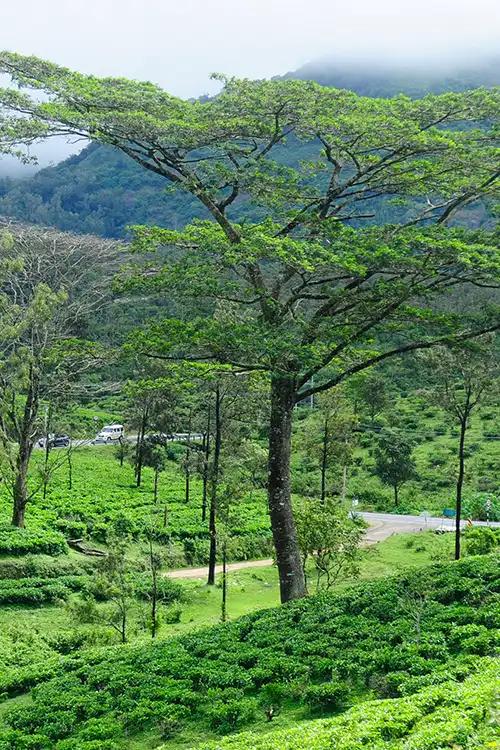
Binoculars enhance the experience, especially on clear days when the light travels far. Busy stretches of the Valparai road occasionally become visible, including glimpses of the famous ninth hairpin bend. Surrounding the hill, coconut trees and palmyra clusters line the open fields, creating a natural frame of green around the rocky summit.
Kunnampidari also offers a glimpse into Kozhinjampara’s changing landscape. Once known for granite quarries, the area has gradually transformed after quarry operations were closed for environmental reasons. Rainwater has filled several of the disused pits, turning them into quiet ponds visible from above during the climb. After descending, travellers can follow narrow mud roads to reach the Mani check dam, where palmyra palms gather in loose clusters and meadows open to the sky. In the rainy months, red water lilies bloom across shallow pools near the base of the granite hill, closing the trip with a simple rural detail that stays etched in memory.
With its short trek, border-village character and panoramic views of one of Kerala’s most familiar mountain corridors, Kunnampidari Hill is a gentle outdoor stop suited to small groups, bikers and travellers looking for a quiet vantage point over the Western Ghats.
These digital guides serve as invaluable tools for travellers planning their Kerala vacations.
Looking for nearby destinations? Check-out these!
Here's a wide range of accredited hospitality services available in Kunnampidari Hill.
Your safety is our top priority: Choose from a select group of accredited adventure tour operators for an unforgettable experience.
Also, do not miss out on these Hills

Kunnampidari Hill