At the graveyard, the body is laid in the grave with the face turned to the right, facing the direction of the Qibla (the direction of Makkah), following Islamic funeral tradition.Family members may recite the Quranic chapter of Mulk during the burial ceremony and repeat special supplications.The Molla (custodian of the mosque) chants prayers while sitting at the head of the grave.Finally, the Imam of the mosque prays standing at the side of the grave, seeking paradise for the deceased in the hereafter.Stones (Meesan Kallu) are placed on the sides of the feet and head of the grave.Lastly, a small shrub is planted on the grave, and water is sprinkled over it.
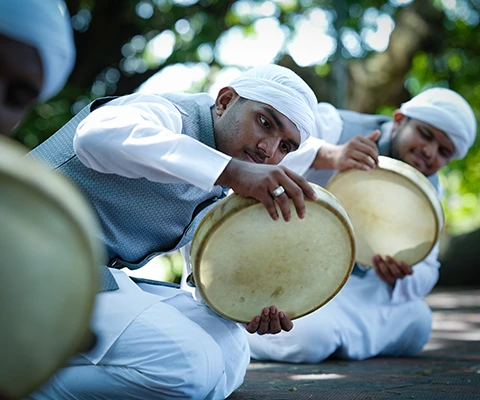
After the burial, relatives gather at home to hold a Moulid (a special eulogy for the Prophet, often in prose and poetry) ceremony, praying for the salvation of the deceased.The family observes a mourning period, which varies across Malabar but is most intense during the first three days.During this period, family members abstain from celebrations and may avoid leaving the house.
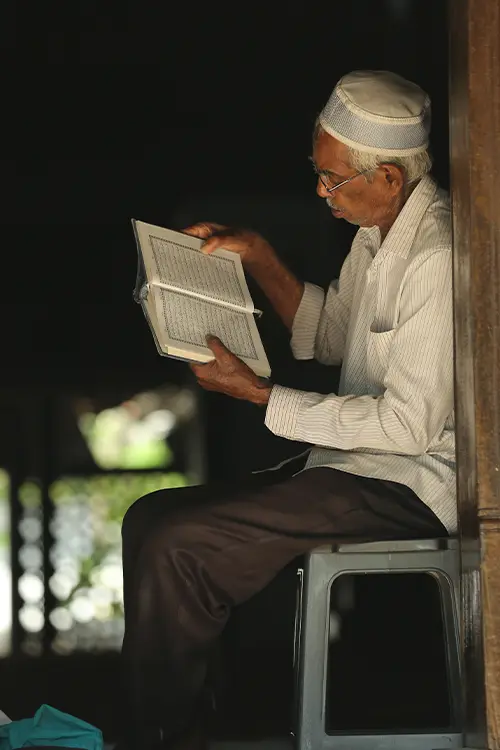
Affluent families often construct a small hut over the grave, appointing a Mullah (religious scholar) to recite the Quran continuously for seven days.A special ceremony marks the conclusion, frequently accompanied by the distribution of sweets, such as haluva, a traditional delicacy of Malabar.
A special prayer gathering is held on the seventh day after death, often attended by family and close friends.Prayers are offered for the departed soul, with the belief that these prayers bring peace to the deceased.
In some areas, the fortieth day after death holds particular significance.Close family members gather at home to recite important chapters from the Quran, especially the 115th chapter.A feast is often organized to feed the poor and relatives.However, due to economic constraints, peasants may sometimes forgo these ceremonies.On this day, some families also distribute charity (sadaqah) in the deceased's name.
Many families observe an annual commemoration on the death anniversary of a loved one, known as andu.This event typically includes the recitation of moulid, prayers, Quranic verses, and, in some cases, the distribution of food or charity in memory of the deceased.Giving charity in the deceased's name is an integral part of the mourning process.Families may distribute food, money, or other forms of aid to the poor and needy, believing this will benefit the soul of the departed.
It is customary for family members to visit the grave periodically, especially on significant days like Fridays, the death anniversary, or special occasions such as Bara’ath Day (fifteen days before Ramzan) and the 26th day of Ramzan, to pray for the deceased.