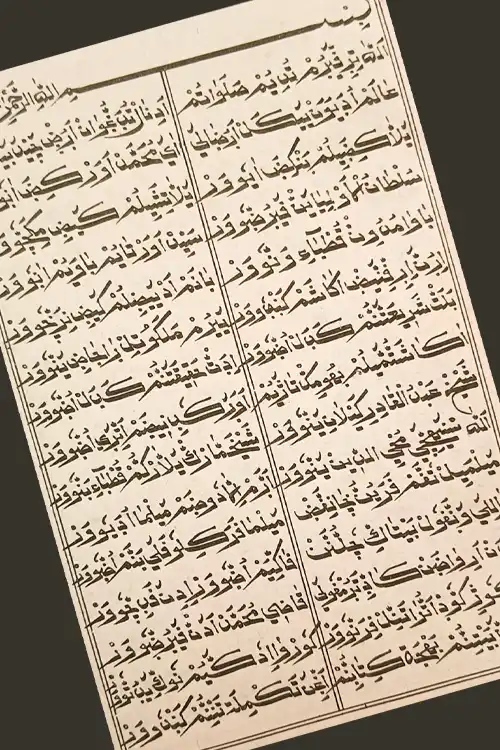
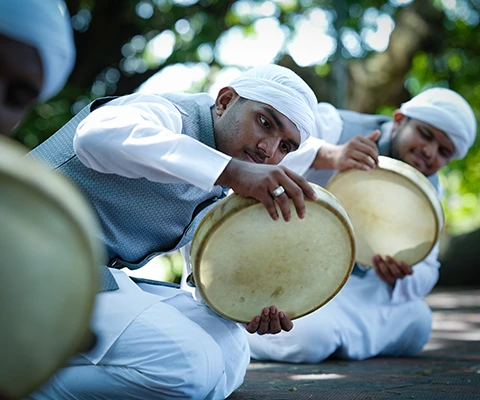
Kissappattukal are narrative songs that sketch the lives of prophets and other great men, often blending historical events with fictional elements.Kathu Pattukal (Letter Songs) are message songs, often carrying romantic or even sensual overtones.Mailanji Pattukal (Henna Songs), sung during weddings, are a variant of marriage songs that capture both real and imagined events.Mad'h songs are praises or descriptive salutes for great men, while Kessu songs generally explore themes of love.
One notable example of Arabi Malayalam literature is a poetic rendition of the Ashtanga Hridayam, a famous Ayurvedic text.Other works include poetry on medical science, Amarakosa word meanings, and stories of Vikramaditya, all written in Arabi Malayalam verse.
Kunjayan Musliar, an 18th-century poet-philosopher, was one of the earliest known Mappila poets.His famous composition, Kappappattu (Ship Song), metaphorically compares life to the movement of a ship and is a contemplation on the human journey.Additionally, he wrote Nul Mala and Nul Mad’h, both of which praise Prophet Muhammad.
Moyinkutty Vaidhyar (d.1892) is widely regarded as the most influential Mappila poet.His early works include the renowned love ballad Badarul Munir Husnul Jamal, which narrates the passionate love story between Husnul Jamal, a minister’s daughter, and Prince Badarul Munir.He also adapted Persian fables into poetic form, producing works such as Elippada (The Army of Rats) and Saleeqat.One of his most notable contributions was a regional war song depicting the battle between Muslims and Paranambi, the Zamorin’s deputy at Malappuram.Moyinkutty Vaidhyar played a pivotal role in popularizing Mappila poetry by integrating Tamil lyrics with Malabar dialects.
Following him, Chettuvayi Pareekkutty (1886) introduced a more refined Malayalam style into Mappila poetry.Later poets such as Shujai Moidu Musliyar (Safala Mala), Chakkeeri Moideen Kutty, Kanjirala Kunhi Rayan Kutty, Qasiyarakath Kunhava, Mundambra Unni Mammad, and Pulikkottil Hyder further enriched the tradition with their compositions.
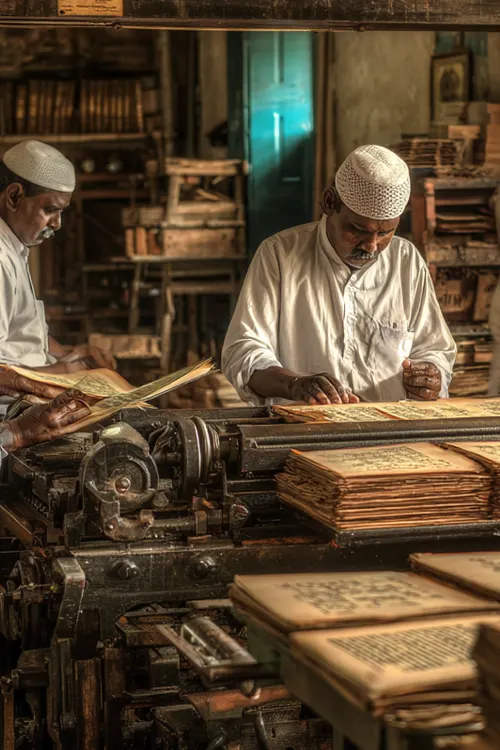
In the eighteenth century, significant developments in printing technology bolstered the spread and preservation of Arabi Malayalam literature.During this period, Mappila Muslims began to establish printing presses in various regions like Thalassery, Ponnani, Tirurangadi, and other significant places.This advancement facilitated the widespread dissemination of poems, stories, and religious texts, making Arabi Malayalam literature more accessible to a larger audience.