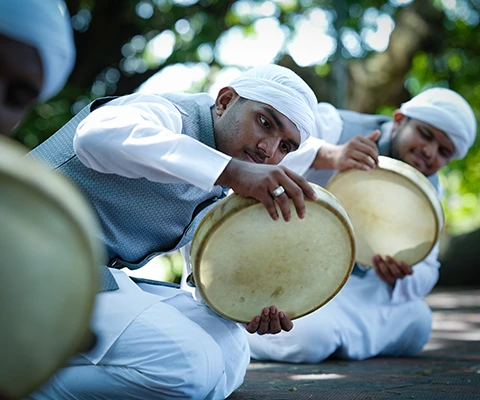
The Mappila marriage ceremony begins with a few relatives of the bride visiting the groom's house to escort him to the bride's house. The groom dresses in traditional attire, typically consisting of a shirt, a white dhoti, and a Turkish cap. The procession to the bride's house is conducted with ceremonial grandeur, usually at night, accompanied by singers and individuals holding lamps. The groom’s relatives follow him in the procession, adding to the festive spirit of the occasion.
Upon arriving at the bride's house, the groom is warmly welcomed by the bride’s family. As part of the ritual, he washes his feet with water poured by the bride’s brother-in-law. In return, the groom offers the brother-in-law a golden ring (mothiram) as a token of appreciation and goodwill.
In some instances, both the bride and groom are seated under a pandal (canopy), similar to practices in other communities, where the groom ties a golden necklace around the bride’s neck. This ritual, known as Thali Kettal (tying the wedding knot), is rare in Mappila marriages, as it is considered contrary to Islamic customs.
The rituals involving the bride are typically conducted in a separate area of the house, creating a more intimate setting. One of the highlights is the performance of Oppana, the traditional folk art form of the Mappila community. During Oppana, the bride is seated on a stool while young women dance gracefully around her, singing Mappila songs that celebrate the joyous occasion.
In a coastal marriage, on the first day of the marriage, a variety of snacks and breads are sent from the bride’s house to the groom’s house. These include kritha, mutta surkka, mutta mala, then kuzhal, cakes, and other delicacies, all carefully packed in a pot called Appachemb. The task of carrying these pots was traditionally performed by the young women of the bride's family. In return, the groom’s family sent large quantities of dates, fruits, and additional snacks back to the bride’s house.
At the bride's house, the groom was seated on a raised platform (kottil), elaborately decorated with vibrant colors and a luxurious roof made of expensive cloth called Melapp. After the completion of the marriage ceremonies, the groom was escorted to a special room (maniyara) prepared for the couple. The bride’s relatives symbolically push her into the room, where she was expected to present betel leaves to the groom as a gesture of respect and welcome. In exchange, the groom offered the bride a special gift, marking the start of their new life together.
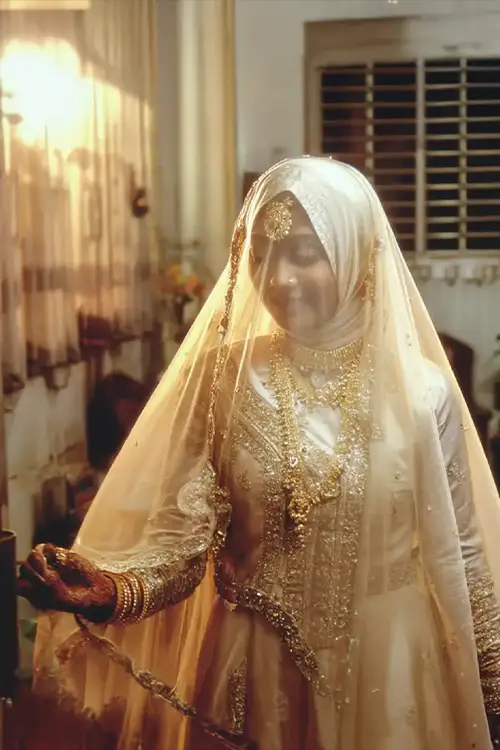
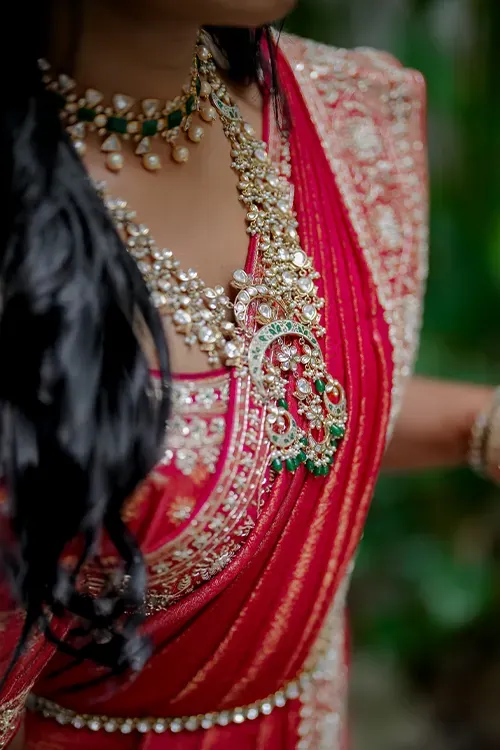
The bride typically wore silk clothing embellished with kasavu (gold-bordered fabric), reflecting the elegance and tradition of Mappila weddings. The ceremonies and feasts extended over several days, incorporating a variety of unique customs. One such custom was called Moodayum Panavum. As part of this tradition, food - primarily rice-based items - was brought to the bride’s house. These items were carefully wrapped in paddy straw in a distinctive manner known as muda, symbolizing prosperity and abundance.