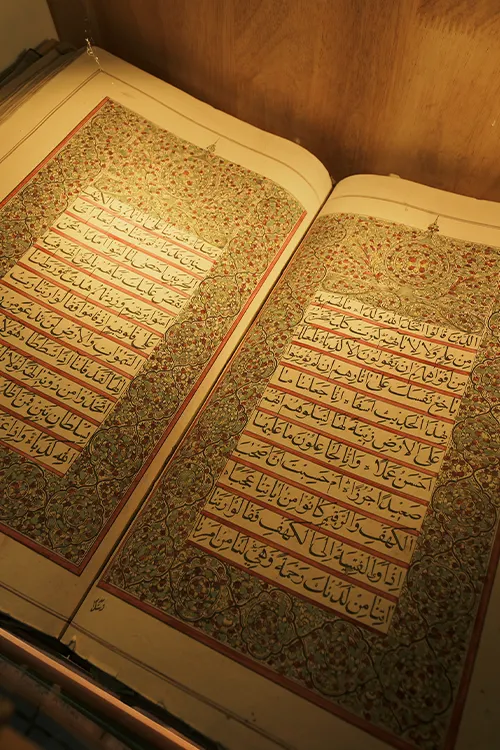
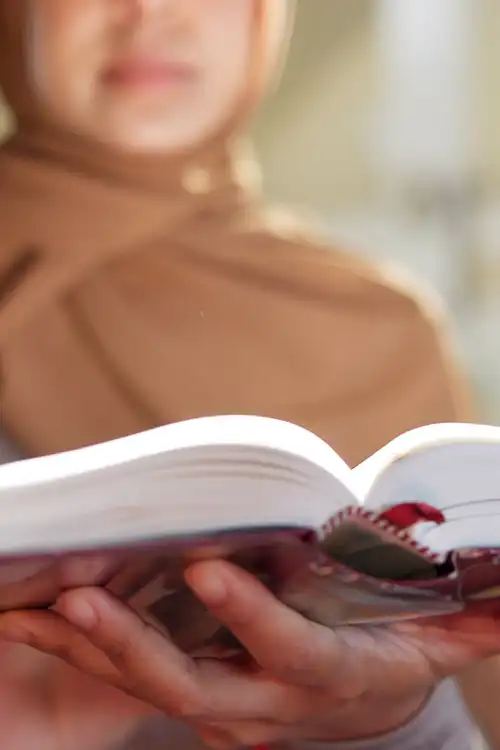
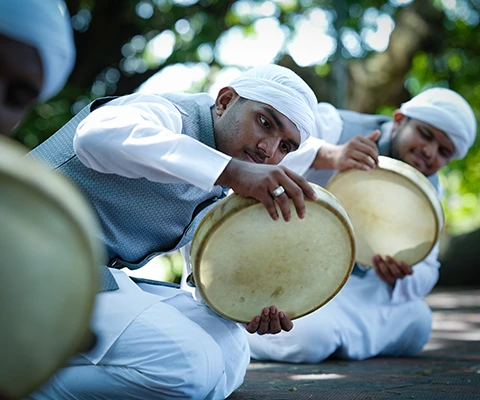
The Mappila Muslim community of Kerala, India, has a rich tradition of education that has evolved over centuries, blending Islamic teachings with modern education. Traditionally, Mappilas received their early education in religious duties at othupallis, informal schools run under a single teacher called a Mulla.
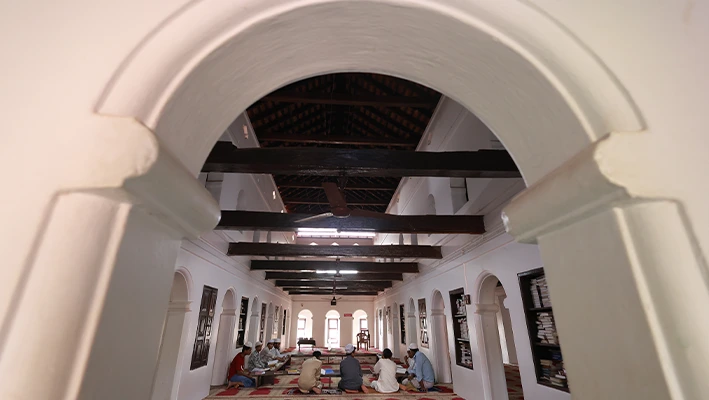
Othupallis often operated in the Mulla’s house, where pupils sat on the floor and memorized short chapters of the Qur'an and litanies connected with daily life. The Mullas depended on gifts from students, usually in the form of rice or other basic provisions. Additionally, the Mulla would visit the homes of pupils to receive charitable contributions from their parents.
Students carried a slate called louh (a wooden plate) smeared with loose mud and wrote on it using a small wooden twig, often referred to as a qalam (pen). Interestingly, some othupallis were conducted by women, who were called Mollathis.
Education at the othupalli typically lasted three to six years. After completing this basic education, students either transitioned to their traditional jobs or pursued higher studies at mosque seminaries known as Dars, which offered advanced instruction in Islamic theology and jurisprudence.
During the colonial era, the British introduced a modern education system in India, drawing many Mappilas, toward Western education. Concerned about the potential loss of religious identity, the traditional ulama sought to reform the existing othupalli system. This led to the establishment of the Samasta Kerala Vidyabhyasa Board in 1951, as an educational wing of the Samasta Kerala Jamiyyathul Ulama, the chief organization of the Islamic traditional scholars.
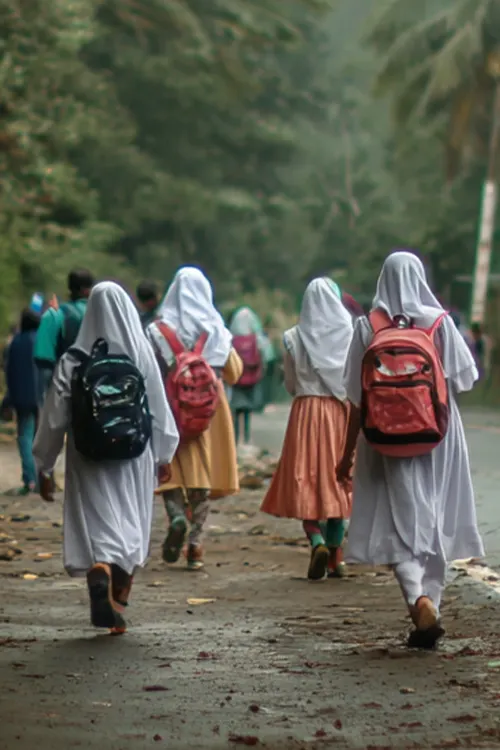
Today, approximately 9,000 madrasas operate under this board, providing education to around 1.3 million students and employing more than 100,000 teachers. The salaries of teachers and operational expenses of these madrasas are funded by local village communities. Additionally, the board manages pension schemes and welfare funds for retired teachers. Its financial sustainability primarily relies on examination fees and the sale of textbooks.
In addition to this organization, the Kanthapuram faction of the Sunnis established its own Sunni Educational Board, which offers a modern syllabus and incorporates digital teaching and learning facilities. Reformist factions within the community, Nadwatul Mujahidin and Jamaat-e-Islami, have also set up their own educational boards, further diversifying the educational landscape of the Muslims. Boarding schools combining madrasa and school education were established by Muslim organizations in the 1960s. The first such institution, Islahiya, was opened at Chennamangallur in Kozhikode in 1964, followed by Ilahiyya at Tirurkkad in 1967. This model was later adopted by Crescent Boarding School at Velimukku, Malappuram, and similar institutions in Kasargod, Karanthur, Valanchery, and other locations. These schools provided hostel facilities where students resided and pursued both religious and general education in a structured, faith-based environment.