










Other Kerala Cuisine Images
Also, do not miss out on these
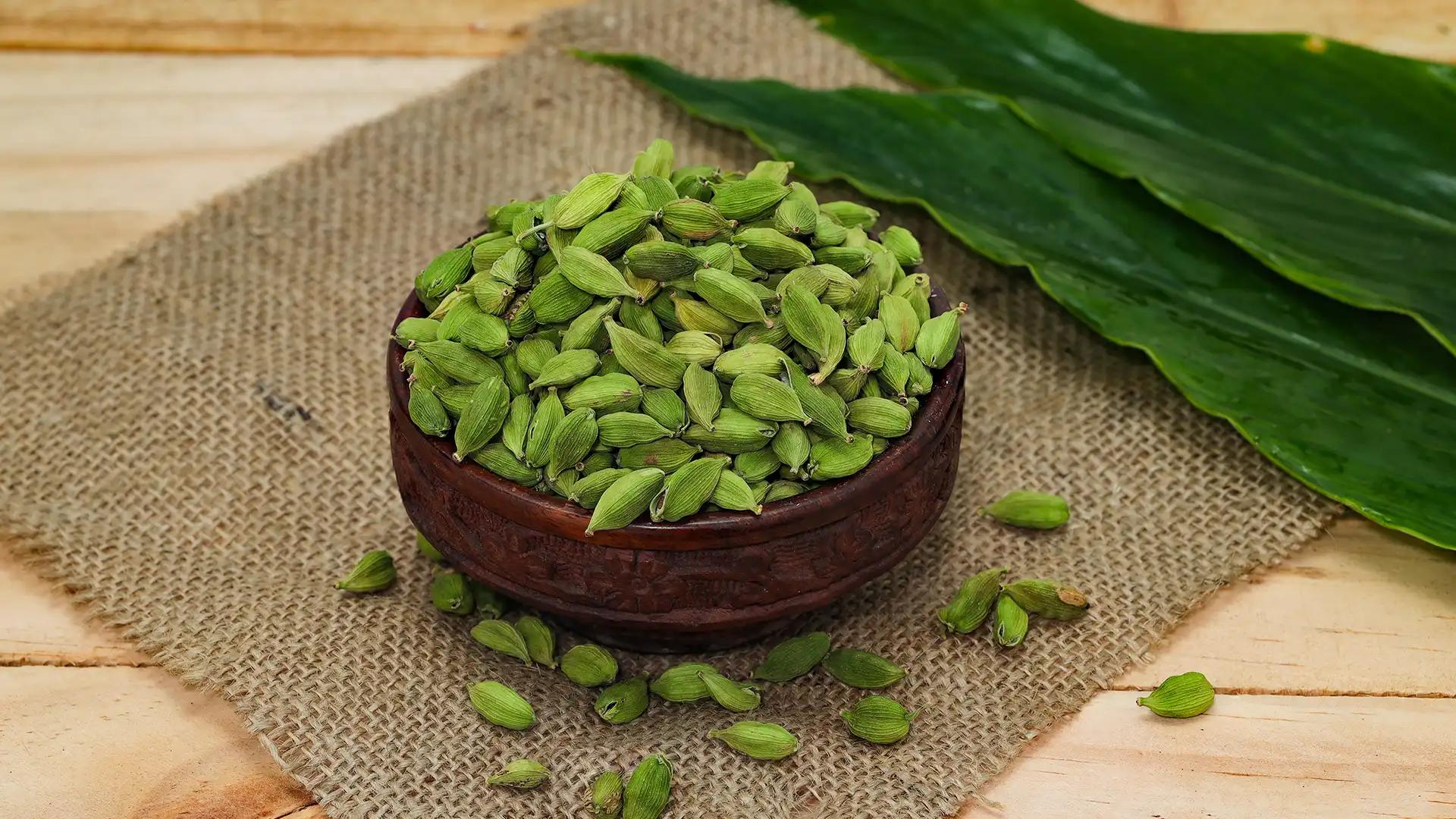
The visual beautifully showcases cardamom, Kerala's celebrated "queen of spices," in its natural, freshly dried form. A rustic wooden bowl, filled to the brim with bright green pods, sits atop a textured jute mat, emphasizing the earthy origins of this treasured spice. Scattered pods around the bowl add to the sense of abundance, while the large, deep-green leaves in the background makes one reminisce the lush plantations of Kerala's Western Ghats where cardamom thrives.
Cardamom (Elettaria cardamomum Maton), belonging to the Zingiberaceae family, is one of Kerala's most valuable spice crops and an integral part of its agrarian identity. The state is home to the world's largest cardamom market, located at Kumily near Munnar, where traders and growers converge. Among the three main varieties,Malabar, Mysore, and Vazuka, the Malabar type is native to Kerala and distinct for its prostrate panicles.
Beyond its agricultural significance, cardamom holds a cherished place in Kerala's cuisine. From flavouring rich payasams and festive dishes to enhancing teas and coffees, its sweet, aromatic profile is indispensable. Globally, cardamom is valued for its oil and oleoresin, used in confectionery, baked goods, ayurvedic medicine, and perfumery. This photograph encapsulates not only the spice itself but also Kerala's enduring legacy as a spice capital.
Also, do not miss out on these
A bowl of tradition, aroma, and Kerala’s timeless spice magic


