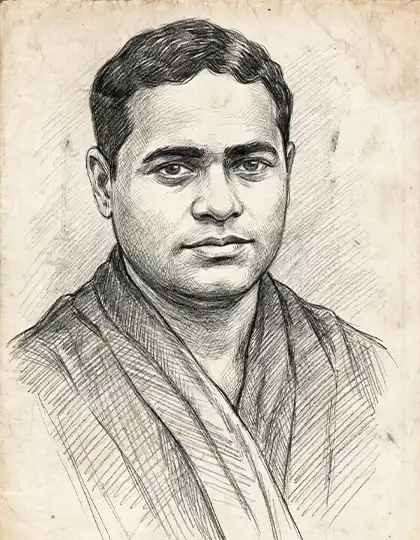
Satyavrata Swami's real name was Ayyappan Pillai. Born into the Nair community, he met Guru at the Advaita Ashram and became a disciple. He was a great philanthropist, full of compassion for fellow beings. Guru gave the name ‘Satyavrata’ to this humanitarian who made truth his vow.
Satyavrata was known for his social commitment. He was one of the strongest opposers of caste discrimination among Guru’s disciples. He spent a considerable time in Sri Lanka to propagate Guru's ideas. Guru appointed him as a teacher at the Advaita Ashram Sanskrit School.
Satyavrata was one of the main organizers of the All-Religion Conference in 1924. T.K. Madhavan had Satyavrata's support in taking many historical decisions. Satyavrata Swami's influence was also behind the ‘Savarna Jatha’ (Upper-Caste March) led by Mannath Padmanabhan during the Vaikom Satyagraha. Guru entrusted Satyavrata with the secretaryship of the Advaita Ashram and the management of its properties. Satyavrata Swami devoted his life to advancing humanity’s welfare.
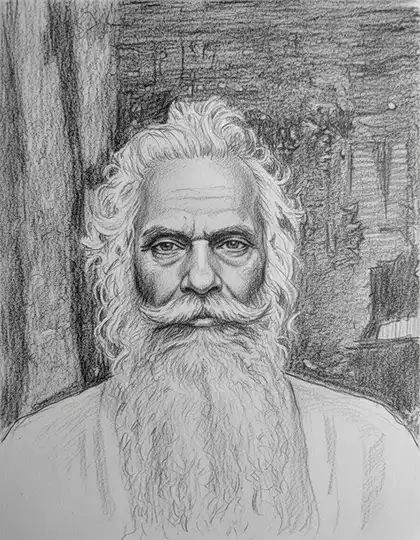
Sree Narayana Chaitanya Swami showed interest in asceticism from a young age. He became a disciple of Narayana Guru at the suggestion of Chattampi Swami. Chaitanya Swami often participated in Guru's temple consecration ceremonies. Sivalingadasa Swami and Chaitanya Swami worked together tirelessly to propagate Guru’s messages. Guru ordained Chaitanya Swami as a monk during his sixtieth birthday celebrations.
Chaitanya Swami was a signatory witness when the Sree Narayana Dharma Paripalana Sangam was formed. He was involved in the construction activities of temples like Thalassery Jagannatha Temple and Kozhikode Sreekanteswara Temple. Chaitanya Swami, who was also a sculptor, showed great interest in Yoga Vidya and Vedic rituals. He was at the forefront of propagating Guru's philosophy.
Chaitanya Swami’s unique blend of artistic skill and Vedic expertise allowed
him to physically shape Guru’s reformist vision. By integrating sculptural
mastery with rigorous Yoga Vidya, he transformed spiritual philosophy into
tangible monuments of social progress, ensuring Guru’s message reached the
masses through both art and active ministry.


