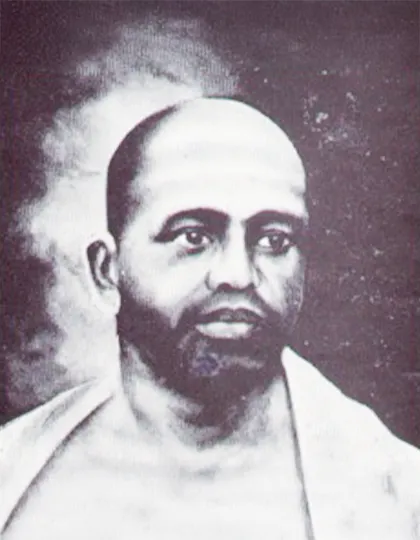
Sivalingadasa Swami, originally named Ayyappan Pillai, was one of Narayana Guru's earliest disciples from Aruvippuram. He belonged to the Nair community and met the Guru in a cave while herding cows. Despite some initial opposition from his community, his bond with the Guru grew stronger. The Guru advised him to study ‘Brahmavidya’ (Knowledge of the Absolute) when he decided to embrace monkhood.
He was a close companion to the Guru during the Sivalinga consecration at Aruvippuram in 1888. It was then that the Guru named him ‘Sivalingadasa’ Swami, meaning 'servant of Sivalinga'. Interestingly, the Guru gave him the white robes of a sanyasi at the 7th anniversary of Aruvippuram, while other disciples were given saffron robes.
Beyond spiritual pursuits, Sivalingadasa Swami was also a creative force, authoring about forty works, including ‘Sharadashtakam’ and ‘Gurushtakam’. He also wrote commentaries on Guru's ‘Municharyapanjakam’ and ‘Jananinavaratna Manjari’. He played a crucial role in disseminating the Guru's message to common people and took charge of the Sree Narayana institutions in Peringottukara. Kumaran Asan penned the poem ‘Parannupoya Hamsam’ (The Swan That Flew Away) upon his demise.
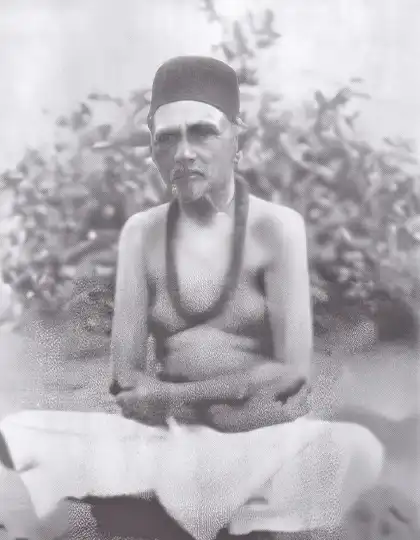
Bhairavan Shanthi stood out among Sree Narayana Guru's disciples. Showing a keen interest in celibacy, he was appointed as the priest of the Aruvippuram temple. He served by accepting offerings for the Guru there, living as a constant, devoted presence in Guru's life. Bhairavan Shanthi remained in Aruvippuram until his 'Samadhi' at the remarkable age of 120.
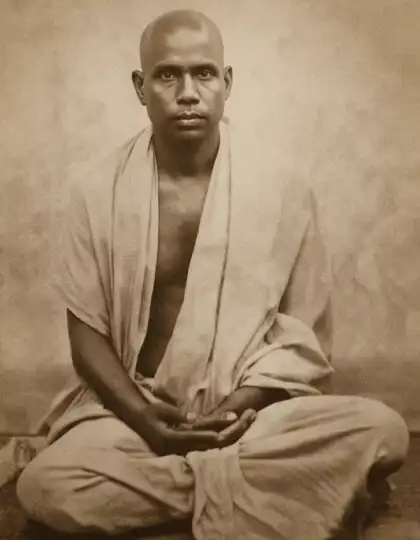
Bodhananda Swami was a prominent disciple of Sree Narayana Guru and was later chosen by the Guru as his successor. He was a radical reformer who was ready to sacrifice even his life to eradicate caste. His policy was to confront evil customs and violence with violence itself. He started voluntary youth organizations known as 'Dharma Bhata Sangam' (Righteousness Militia) and 'Rahasyasangham' (Secret Society).
Guru and Bodhananda first met during the consecration ceremony at Jagannatha Temple in Thalassery. Guru welcomed Bodhananda as a disciple on the day Sharada Devi was consecrated as the Goddess of Knowledge in Sivagiri. Bodhananda, who embraced the path of asceticism, took a strong and radical stand against caste issues. During festivals in upper-caste temples, lower castes residing on both sides of the road had to leave their homes. The 'Dharma Bhata Sangam' led by Bodhananda succeeded in putting an end to this evil custom.
In the village of Thanissery, near Thrissur, when an Ezhava member of a prominent family died, Guru instructed that the deceased's body be cremated. This was opposed by members of the upper-caste communities, leading to a riot. However, due to the strong intervention of the Dharma Bhata Sangam led by Bodhananda, the upper castes retreated. This incident came to be known as the Thannisseri Uprising and was a milestone in the social history of Kerala.
Bodhananda Swami was devoted to the economic and cultural upliftment of the community. The formation of the S.N.D.P. Yogam and the Ezhava Samajam in Koorkancherry was the result of his efforts. He was also at the forefront of the construction of the Aluva Advaita Ashram.


