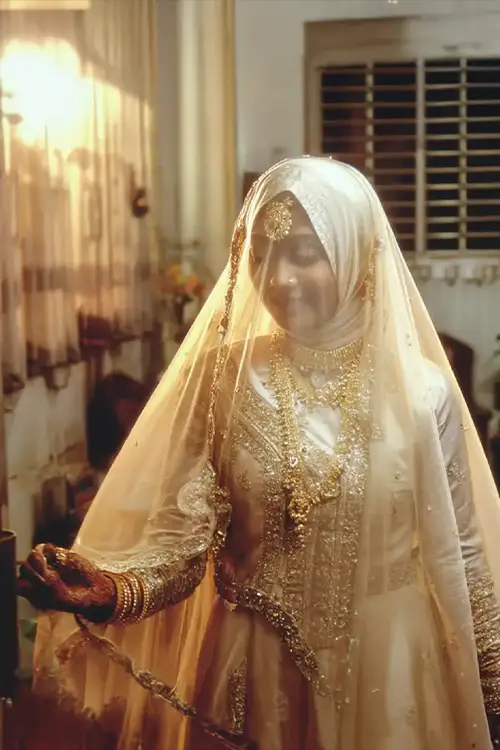
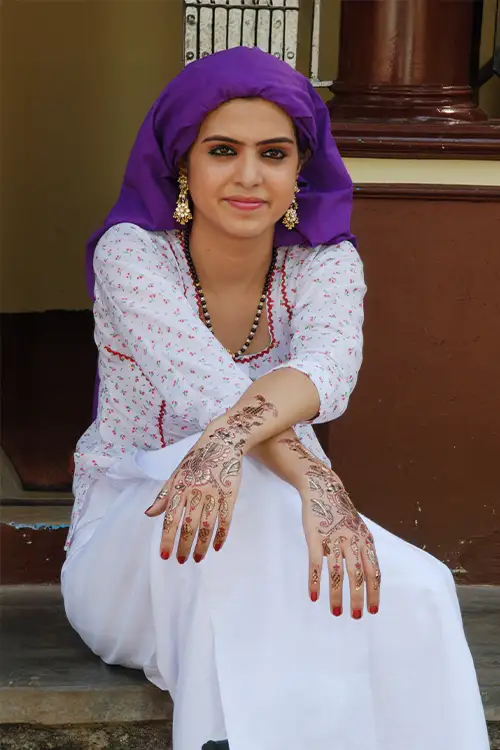
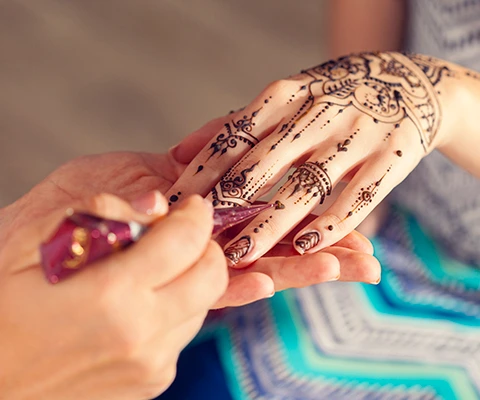
During the ceremony, the girl is bathed by the elder women in the family, dressed in new clothes, and blessed by family and community members.A feast or celebration often follows, emphasizing the importance of fertility, womanhood, and the passage of time in her life.
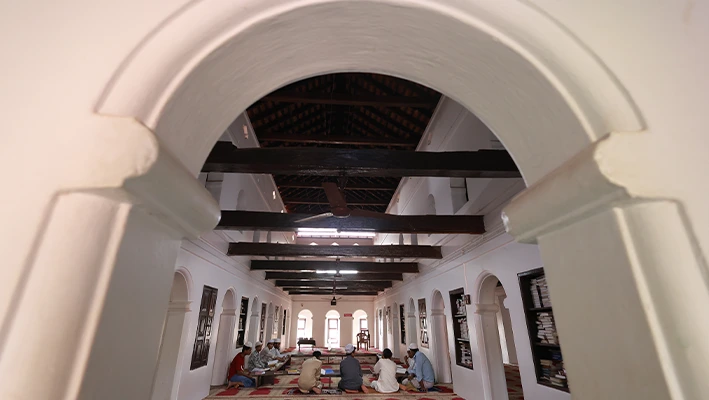
Children typically begin their education at the age of four or five.Their first step is enrollment in a religious school, where they are introduced to the Arabic alphabet.The journey begins with Alif, the first letter of the name of God, Allah.Sweets are distributed to celebrate this important milestone in the child’s life. In earlier times, before the establishment of organized Islamic schools, this ceremony was conducted at a house or an Othupalli, a small, informal learning center where a single teacher called Mollakka educated all the children.Sometimes, the teacher’s home served as the Othupalli. At these centers, a traditional slate known as louh was used for writing.The louh was a wooden board coated with a layer of mud, on which students wrote using a small stick called qalam.Boys would often continue their studies at the Othupalli for several years.After completing their basic education, they either advanced to mosques for further religious studies or concluded their formal education.This traditional practice continued until the establishment of Madrasa (religious schools) by the ulama (a body of Islamic scholars), which introduced modern methods of education. With the introduction of Madrasa and formal schools, Muslim children began attending Madrasa classes in the early morning for religious instruction before proceeding to secular schools for general education.By the 1970s, boarding schools that combined religious and secular education began to emerge.Wealthier families often enrolled their children in these institutions, while less affluent families relied on local madrasas and public schools for their children’s education. The Gulf boom had a profound impact on the education of Muslim children.As families sought opportunities in Arab countries, sending children to English-medium schools became increasingly common.In response, Muslim leadership established English-medium schools affiliated with the CBSE (Central Board of Secondary Education) and Kerala Educational Board.These schools often provided a combined curriculum of Islamic and secular education, reflecting the community’s evolving aspirations and priorities.However, a majority of the children study in general public schools.