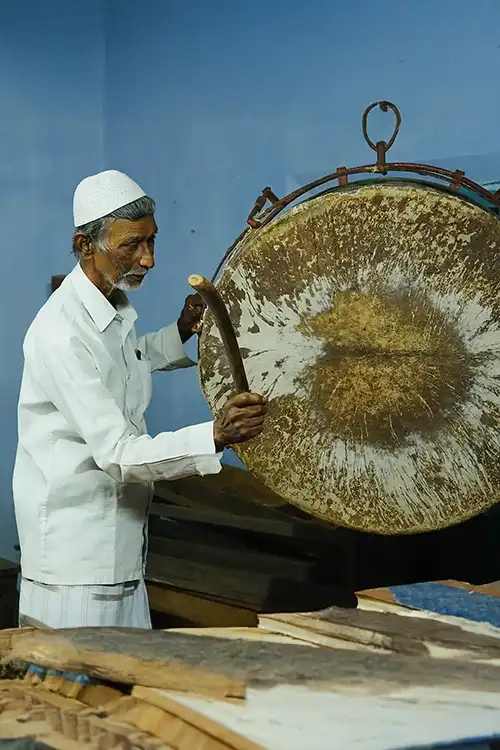
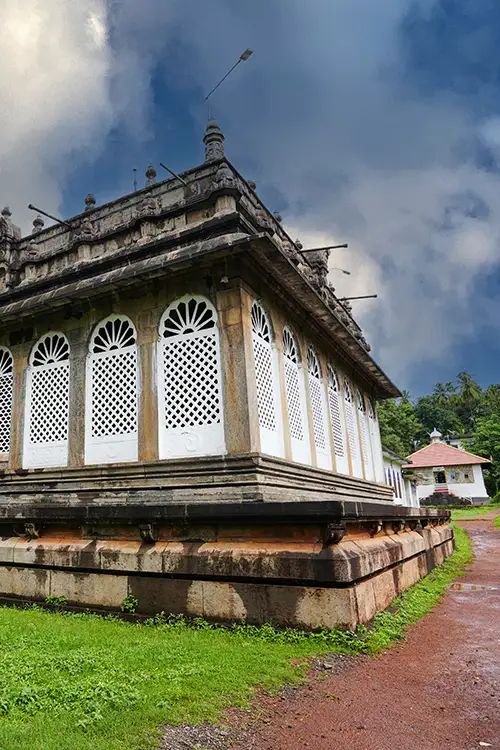
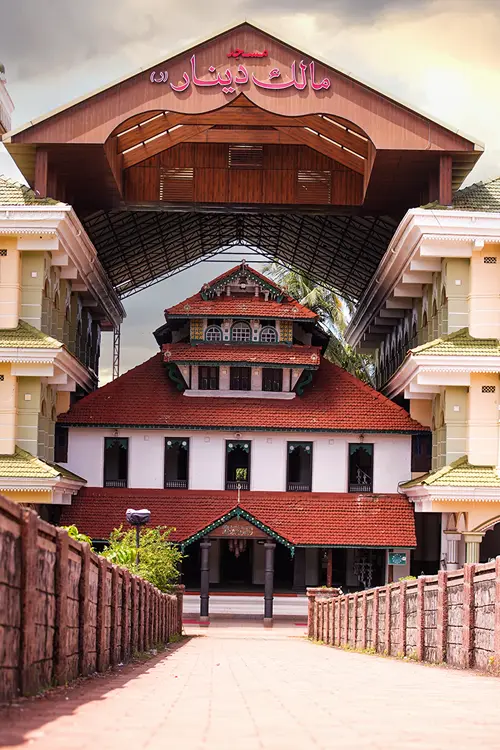
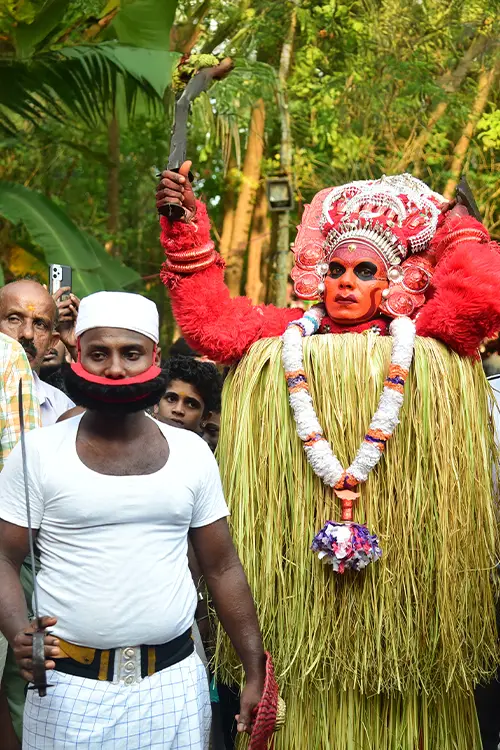
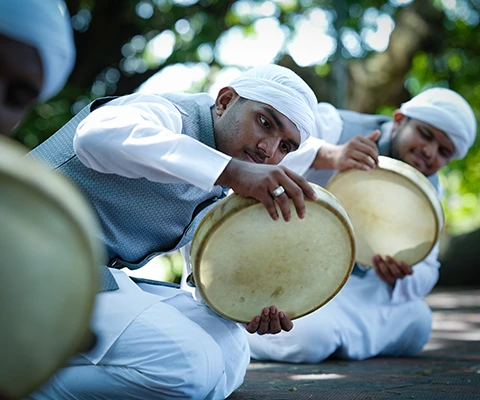
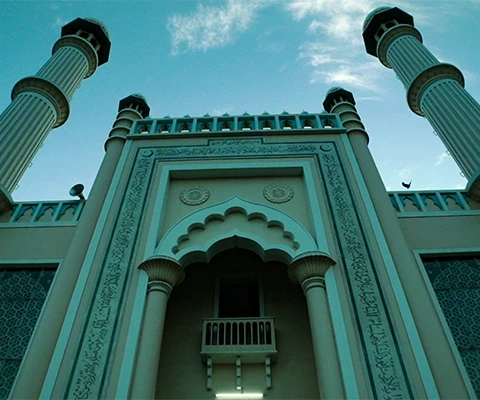
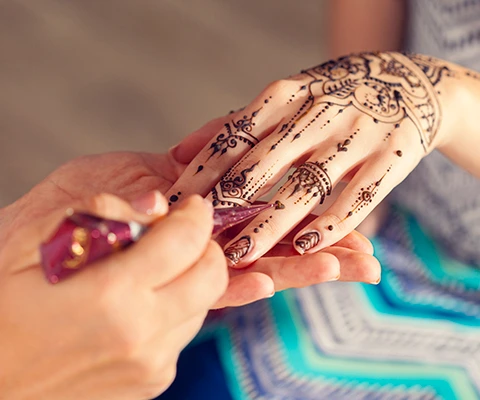
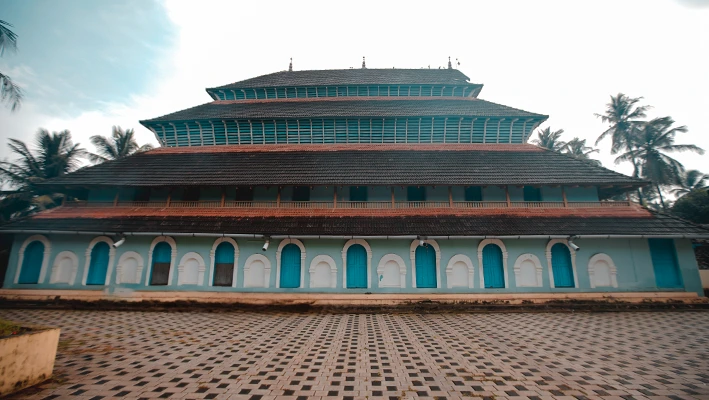
The cultural confluence between Hindus and Muslims is further evident in Mappila art and architecture.Mappilas adopted indigenous artistic traditions, modifying them slightly to reflect Islamic themes.A prime example is kolkali, a Mappila adaptation of the Hindu folk art kolattam or koladipattu.Historically, kolattam was a women’s dance and is linked to Hindu mythology—legend says that Vishwakarma, the divine architect, carved twenty-one finger-long sticks from the sami tree (chamata) and gifted them to Lord Krishna, who then passed them on to the gopikas (cowherd women).They began using the sticks in playful dance performances.
Over time, lower-caste communities adopted kolattam as their own and performed it during festival seasons.Mappilas later Islamicized the art form by replacing Hindu devotional songs with Islamic ones.Today, Mappila kolkali begins with prayers to Allah, Prophet Muhammad, and Sufi saints, demonstrating the blend of local cultural traditions with Islamic elements.
The Kerala martial art kalaripayattu was adopted and practiced by Mappilas as their own.Originally, kalari was intended to foster martial spirit among the Nairs and keep them fit for battle.The kalari schools were generally attached to Bhagavathi temples and were presided over by asans or gurukkals (masters).Over time, Mappila Muslims also adopted this martial art and established kalari training centers in Mappila localities.
The northern ballads make references to Muslims trained in kalaripayattu.Tacholi Othenan, the legendary hero of these ballads, is said to have paid obeisance to Kunhali Marakkar, the Mappila commander of the Zamorins, and offered him gifts before establishing his own kalari.