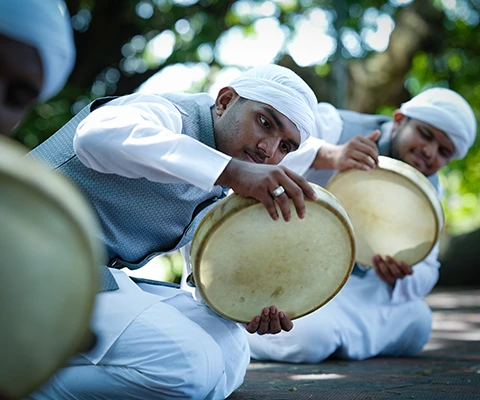
Children are generally free from rituals until they reach the age of five.Boys traditionally wore ornaments such as an anklet called thanda, while girls adorned a round silver ornament called thala.Girls also had their ears pierced for wearing earrings in a ceremony known as Kathukuthu Kalyanam.This ceremony, usually performed when the girl turns one, has largely faded from practice, as ear-piercing for this purpose is no longer common. Boys' Rituals For boys, the circumcision ceremony, called Marga Kalyanam or Sunnath Kalyanam, is typically conducted when they are five or six years old, although it may sometimes be delayed until they are around nine.In affluent families, this event is celebrated with grandeur and joy, often including a special orchestra to enhance the festive atmosphere. The circumcision is accompanied by special rituals and prayers in the presence of family members.After the procedure, the boy is required to rest in bed for at least fifteen days.During this recovery period, relatives visit the family with traditional sweets and snacks as a gesture of care and celebration. A related ceremony, Ezhu Kuli (Bathing on the Seventh Day), is observed.This ritual marks the seventh day after the boy’s circumcision.The boy is dressed as a groom, symbolizing his transition to a new phase in life, and a procession is often held to mark the occasion. Girls' Rituals For girls, a ritual called Thirandu Kuli (Bathing Ceremony for First Menstruation) marks the onset of menstruation.This significant rite celebrates the girl's transition into womanhood.