









Other Unexplored Malabar Experiences Images
Also, do not miss out on these
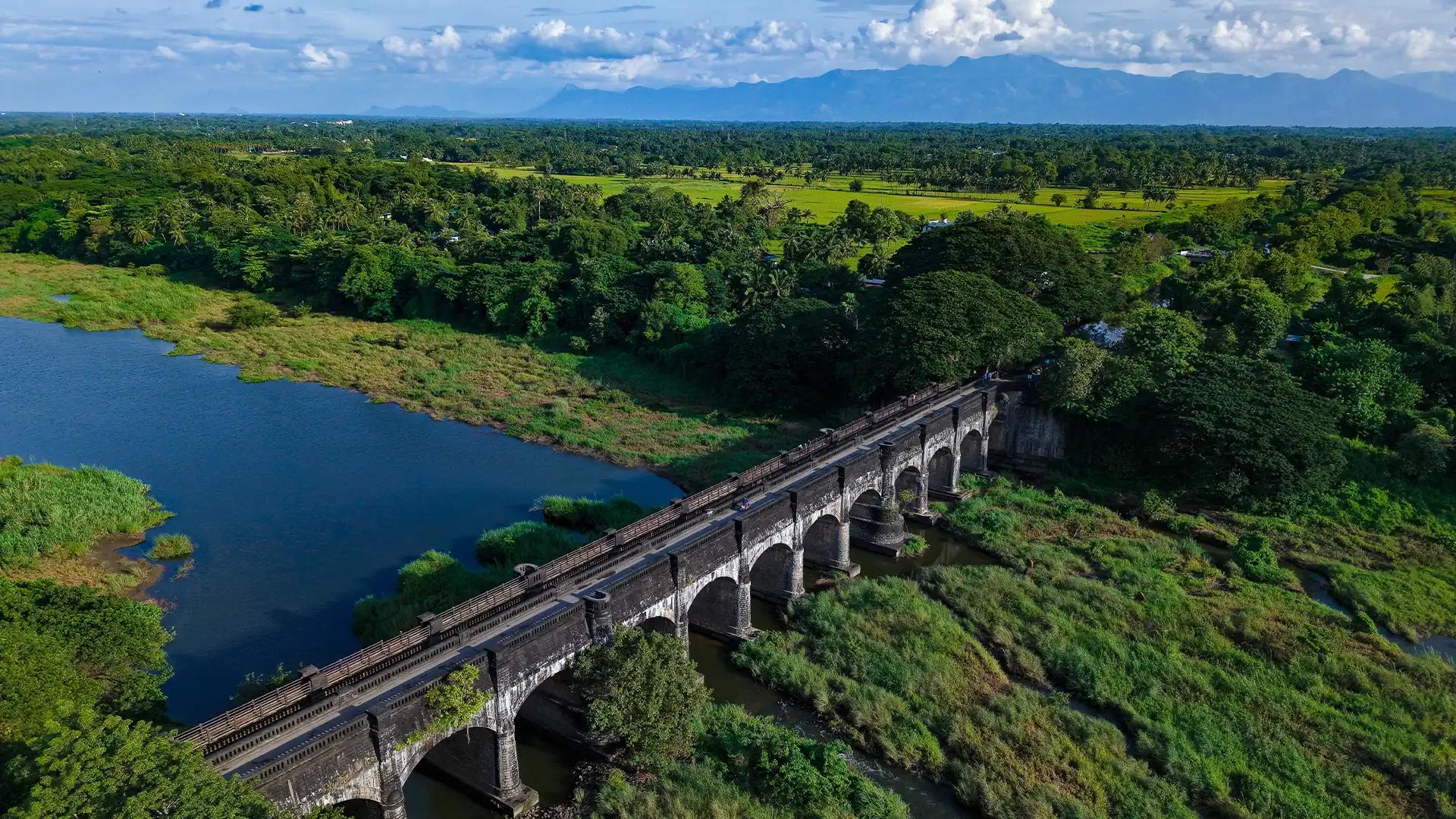
From above, the British Bridge at Karingarapully appears almost unhurried, stretching across the Shokanashini River in a measured sequence of stone arches. Built in 1941 as the Kannadi Aqueduct, the structure carries a canal across the river, an engineering solution designed to move water through Palakkad’s countryside rather than simply span it. Dark stone rises from shallow water and marsh, each arch repeating the last, forming a steady passage between two banks thick with reeds and vegetation.
Below, the river moves calmly through its course as a tributary of the Bharathapuzha, its edges softened by grasses and wetland growth. Patches of open water reflect the sky in muted tones, while the aqueduct above maintains its straight, deliberate line. From this perspective, the relationship between river and canal becomes clear: one flowing freely below, the other guided with precision across it.
Beyond the bridge, the landscape opens into Palakkad’s agricultural heartland. Broad paddy fields spread out in layered shades of green, broken by clusters of trees and narrow pathways that mark everyday movement through the land. In the distance, low hills rise gently beneath a wide sky, their outlines softened by cloud and light. The bridge does not dominate this view. Instead, it settles into the terrain, acting as a quiet link between water, farmland and forest.
The stone surface bears the marks of long exposure. Weathered edges, darkened spans and softened textures speak of decades under sun and monsoon rain. Seen from this height, the aqueduct’s function as part of the Malampuzha irrigation system remains present but understated. It becomes a calm connector, allowing water, land and movement to coexist.
Also, do not miss out on these
British Bridge at Karingarapully


