










Other Unexplored Malabar Experiences Images
Also, do not miss out on these
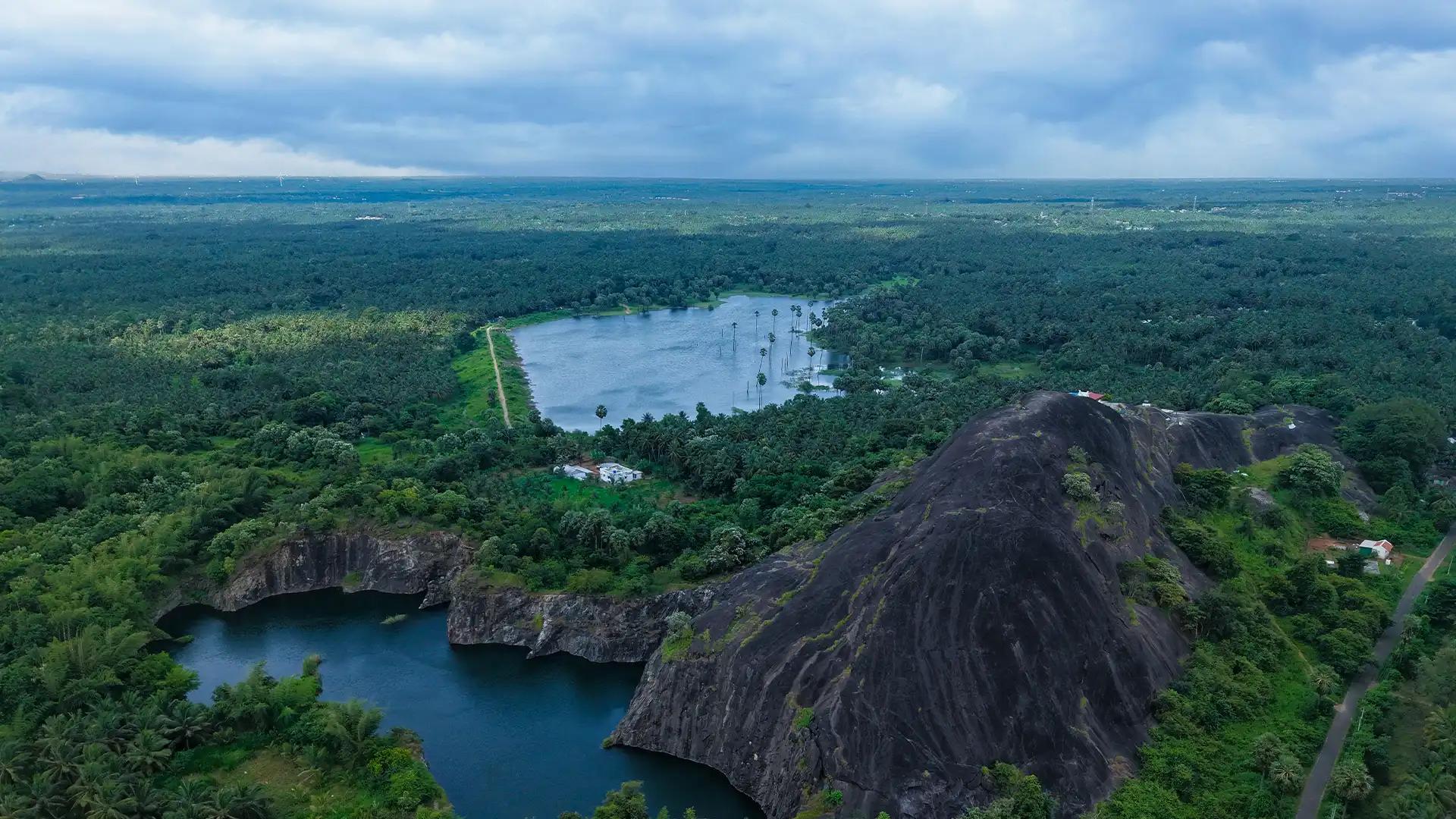
The view from Kunnampidari Hill stretches out in long, steady layers of green. Coconut palms stand in loose lines, and beyond them water gathers in low spaces where the land dips. A dark rise of granite sits to one side, its surface worn smooth by years of rain and heat. Below, a couple of deep ponds lie tucked against the rock, quiet and still, filling the old quarry cuts that have long since turned into steady sources of water.
Farther out, the countryside settles into wide, uninterrupted ground. A straight bank of earth cuts across the wetland and seems to hold the whole picture together, fields on one side and a broad water sheet on the other. In good light, the horizon feels farther than it actually is; patches of trees grow closer together and then thin out again, blurring toward the distant edge of the plain.
Stone and water share space here without competing. One holds its place firmly, the other takes whatever shape the terrain decides. Small clusters of palmyra trees come and go, especially where rain collects. The greens change throughout the day, darker under bamboo shade, almost pale where young grass spreads near open ground. Seen from above, the place makes quiet sense; Kozhinjampara seems to have grown around a few basic elements that don’t rush or shift much.
Nothing dramatic happens in this landscape. There are no loud markers, no signboards telling what to look at. Instead, the land keeps its history in the slow curves of the rock, the stillness of water in the pits, and the patient growth of vegetation. It’s a view that stays in memory less like a single moment and more like a place you could return to and find almost exactly as it was.
Also, do not miss out on these
Quiet Waters and Granite Slopes of Kunnampidari Hill


