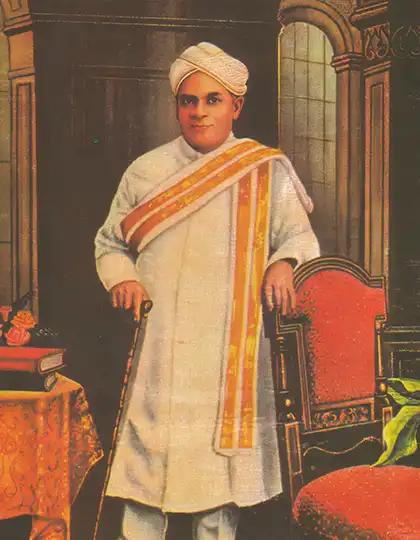
Dr. Palpu harnessed Guru's ideals for the upliftment of disadvantaged communities. Born into the Ezhava caste, he faced job discrimination in his hometown, leading him to work in Madras and Mysore. This personal experience of neglect spurred his unconventional thinking, and he began to voice his concerns publicly through newspapers. These individual struggles collectively alarmed the state government, fearing potential British intervention.
While Palpu actively campaigned against caste discrimination, the Malayali Memorial was submitted to the Maharaja of Travancore in 1891, advocating for backward communities denied government jobs. Palpu was the third signatory. Despite this, the demands of backward communities, including Ezhavas, were rejected. Undeterred, he personally met the Diwan to present his demands. When authorities remained resistant, he submitted the Ezhava Memorial, bearing 13,176 signatures, to Sree Moolam Thirunal in 1896. To raise public awareness, Palpu eloquently highlighted the injustices of the caste system in newspapers. Realizing the Diwan’s unwavering stance, he authored ‘Treatment of Thiyas in Travancore’, a logical discussion of the historical reasons for reservation, and distributed it widely across and beyond Kerala.
Furthering his efforts, a fruitless petition was sent to the Governor of Madras, prompting Barrister G.P. Pillai—a prominent Congress leader and key figure in modern Travancore’s political agitations—to travel to England to present the issue before the British Parliament. His endeavours led to the intervention of Member of Parliament, Herbert Roberts.
Palpu’s persistent efforts instigated numerous changes in Travancore. In 1892, during Swami Vivekananda's visit to Mysore, Palpu presented Kerala’s social problems. Vivekananda, emphasizing that India’s upliftment or downfall lay in the grip of religion, suggested finding a spiritual guru to address social insecurity. Palpu profoundly grasped these words. While serving as a doctor in Mysore, he engaged with disadvantaged communities there, establishing the ‘Valigar Association’ for the Valigar community, whose rules later inspired the formulation of the S.N.D.P. Yogam.
Dr. Palpu was a central figure in the S.N.D.P. movement, tirelessly fighting for the oppressed lower castes. Initially, his focus was solely on education, which he believed was the panacea for all social ills, thus not directly addressing social evils like untouchability. However, with the commencement of the Yogam’s activities, concerted efforts began to eradicate irrational customs.
Dr. Palpu was instrumental in persuading V.P. Madhava Rao, the Diwan of Travancore, to appoint Ezhavas as members of the Praja Sabha. He effectively utilized the Grama Sabha (Village Assembly) to assert the rights of lower castes to school admission, government service representation, and freedom of movement. Beyond strengthening communal standing, he also established and operated the Malabar Economic Union to enhance the community's economic well-being, recognizing the vital role of cottage industries in improving the financial condition of ordinary people. Dr. Palpu was more than a mere disciple; he was a fellow traveller who profoundly influenced Sree Narayana Guru himself.


