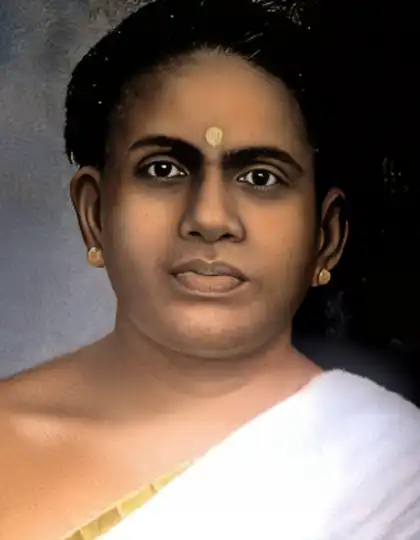
Muloor, a versatile disciple of Narayana Guru, left an indelible mark as a preacher of Sree Narayana Dharma, poet, teacher, school founder, S.N.D.P. Vice-President, and a prominent Harijan leader. Committed to facilitating Guru's global mission, he tirelessly worked to introduce simplified marriage customs among lower castes. He actively organized Harijan associations and composed and sang songs, often engaging in fierce verbal battles to establish fundamental human rights. As a fourteen-year member of the Praja Sabha, Muloor dedicated his life to the upliftment of his own community and other marginalized groups.
Muloor single-handedly challenged and triumphed over the entrenched upper-caste dominance in the literary sphere. When Kodungalloor Kunjikkuttan Thampuran’s poem ‘Kavibharatham’ featured prominent Kerala poets, Muloor humbly advocated for the inclusion of lower-caste poets like Perunelli Krishnan Vaidyar, Velutheri Kesavan Vaidyar, and Sree Narayana Guru. Thampuran, swayed by unconscious caste pride, refused. In protest, Muloor published ‘Kaviramayanam’ in 1896, reimagining Perunelli as Hanuman, Velutheri as Bali, and Sree Narayana Guru as Valmiki.
His poem ‘Sree Narayana Gurudeva Manjari’ extols Narayana Guru’s ideals. Muloor's influence also led to the annual tradition of the Diwan presiding over a meeting of the oppressed during the closing session of the Prajasabha at the Jubilee Town Hall in Thiruvananthapuram. The songs he composed for his disciple Kurumban Daivathan, who was nominated to the Sree Moolam Prajasabha, are famously known as ‘Daivathan Pattukal’. Muloor dedicated his life to propagating Guru's message, bravely confronting the insidious caste demon in both social and literary realms.
Muloor Padmanabha Panicker’s life remains a powerful testament to the transformative strength of Sree Narayana Guru’s teachings. By dismantling caste barriers through his literary genius and legislative advocacy, he effectively turned the pen and the podium into instruments of social revolution. His unwavering dedication to the marginalized ensured that the Guru’s vision of equality was firmly established in both society and literature.


