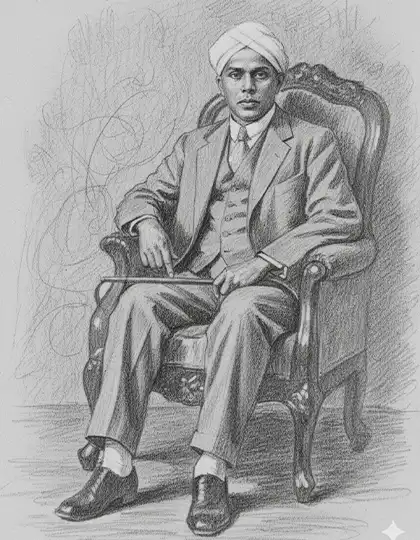
M. Govindan stands out as one of the pioneering Ezhava officials in Travancore, who, despite immense opposition, ascended to the position of a judge. He courageously protested when the government deemed him ineligible for even a clerk’s job in the Huzur Cutchery due to his backward class status. As a member of the legislative assembly, he was instrumental in passing the ‘Marumakkathayam’ (Matrilineal Inheritance) bill for the Ezhava community. He was also a prominent architect of the Ezhava Regulation and a member of the Sree Moolam Prajasabha.
Throughout his life, M. Govindan was a devoted S.N.D.P. leader and a fervent propagator of Narayana Guru’s messages, eventually serving as both President and General Secretary of the S.N.D.P. Yogam. His eloquent speeches were pivotal in bringing the educational and employment grievances of the Ezhava community to the government's attention, ultimately persuading figures like Diwan Rajagopalachari and the Maharaja of Travancore to allow untouchable children into schools and appoint qualified individuals from the community to higher positions. He made history as the first Ezhava from Travancore to be appointed Munsif (judicial officer). After retiring, he managed the model school in Sivagiri, following Guru's instructions. Govindan consistently championed equality and compassion, living a life dedicated to these principles.
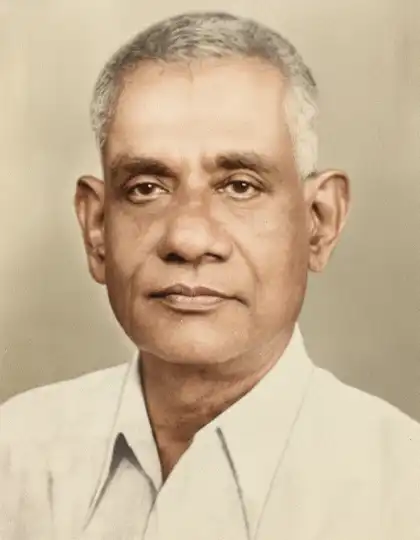
C. Kesavan, a prominent householder disciple of Narayana Guru, was a distinct personality known for his relentless fight against injustice and inequality. His powerful Kozencherry speech, demanding the departure of C.P. Ramaswamy Iyer, the Maharaja of Travancore's advisor, caused a major political stir. This speech fueled the agitation for government job representation among oppressed communities, ultimately leading to the formation of the State Congress in Travancore and empowering people to demand a responsible government.
A staunch follower of Narayana Guru, Kesavan’s journey as a protestor began with the Indian National Congress-led liquor prohibition movement. He later served as the Chief Minister of Thiruvananthapuram-Cochin in 1951, continuing Dr. Palpu’s legacy as a leader in the struggle for people's rights. His autobiography, ‘Jeevita Samaram’, is a significant work in Malayalam literature, serving as a crucial reference detailing the struggles against caste-based injustices. K. Balakrishnan, editor of the Kaumudi weekly, is his son.


