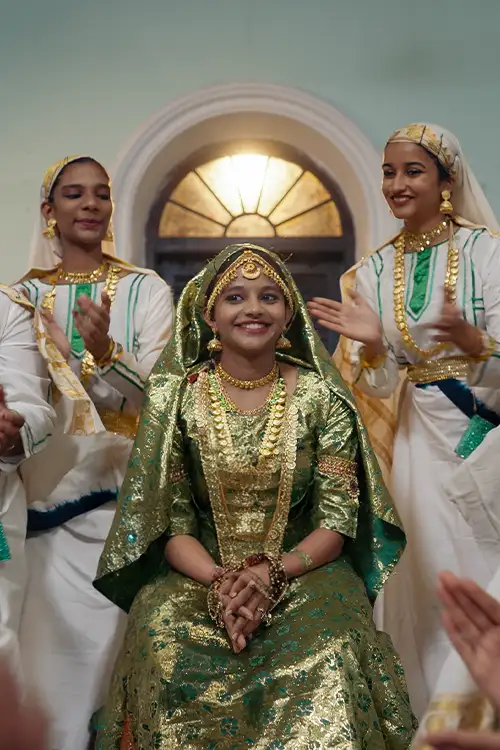
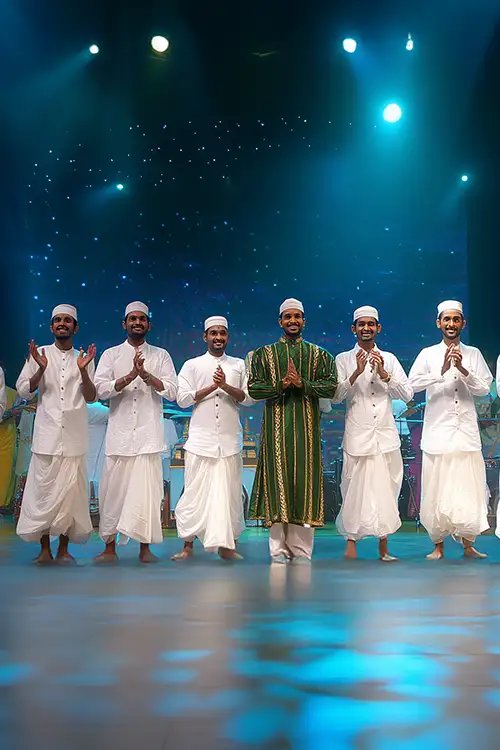
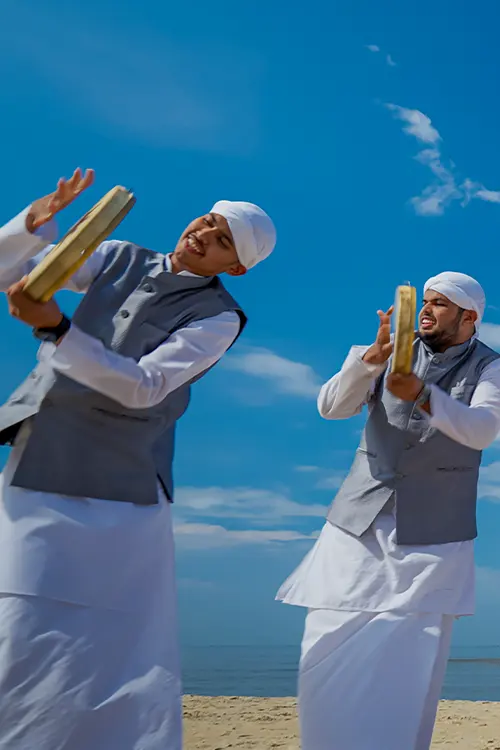
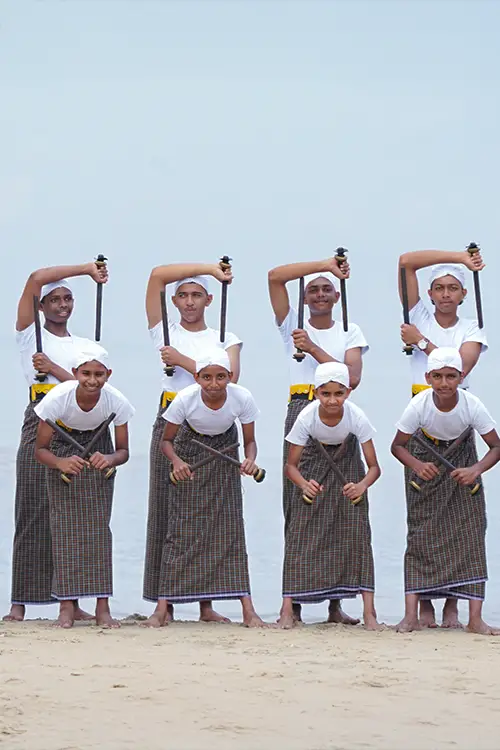
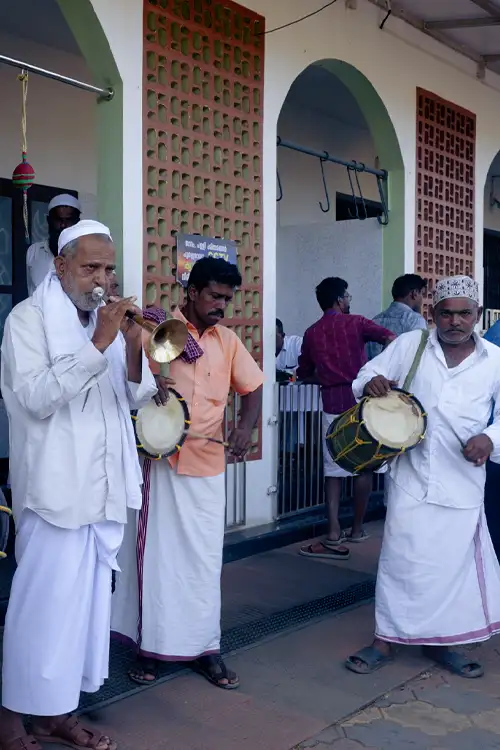
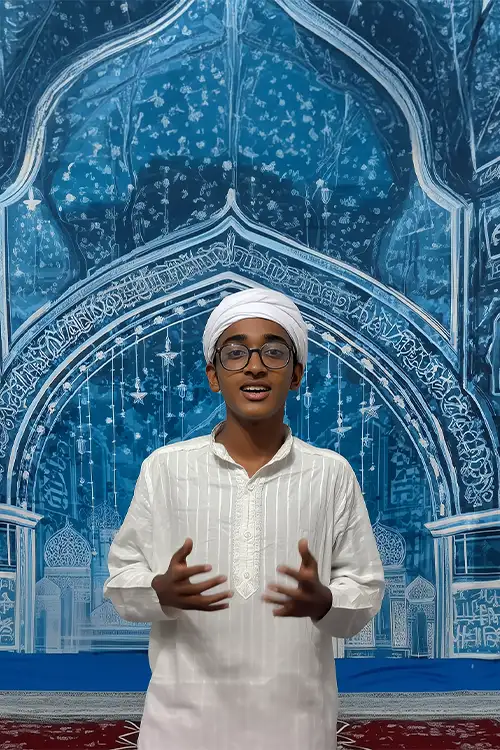
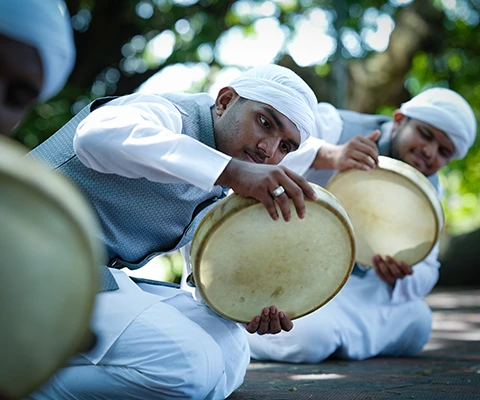
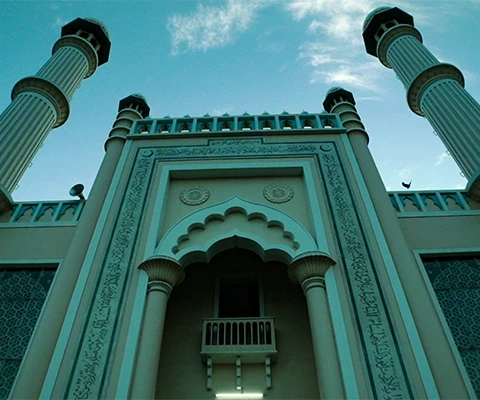
Arabana Muttu is a ritualistic art form performed by men as an act of fulfilling vows, invoking spirits for salvation, or warding off evil and epidemics. Historically, it has been associated with healing practices, especially during times of widespread diseases like smallpox and cholera. The origins of Arabana Muttu can be traced to the Sufi saint Ahmad Kabir al-Rifai (1119–1182), renowned for his miraculous feats with weapons and fire. His followers continued his tradition, incorporating self-mortification with knives and fire in ritual performances. During these ceremonies, the name of Shaikh Rifai is repeatedly chanted, accompanied by the rhythmic beating of the Arabana drum.
Arabana Muttu performers undergo training under a Ratib Musliyar (teacher or Usthad), who initiates students by presenting them with an Arabana, for which the student offers a small gift in return. Training is conducted in a hut-like structure called Ratibu Pura, often attached to the teacher’s house. In some cases, dedicated quarters known as Mahlara or Thakyavu are built specifically for practicing Ratib and the rhythmic beating of the Arabana.
The Arabana is played in various rhythmic styles, including Aachal Muttu, Anchu Muttu, and Kori Muttu. The ritual begins with Aachal Muttu, performed by beating the drum singularly while bending to the right and left in prayer, reciting: Muraadee ya Muraadeeya Muradee, Muraadee Shaikh Ahmadu Rifaaee (“My desire, My desire, Oh Shaikh Ahmad Rifai”). After a period of Aachal Muttu, the drumming transitions into Anchu Muttu, a double-beating rhythm that intensifies the performance. The third and most complex stage is Kori Muttu. In this phase, the performers sit on their legs, bending forward while raising the Arabana above their heads, loudly singing Arabic devotional songs. They then rise onto their knees and repeat the same actions before finally standing up and continuing the rhythmic performance.
Arabana Muttu is more than just a performance; it is a deeply spiritual and devotional practice that intertwines music, movement, and religious invocations. Rooted in Sufi traditions, it serves as a medium of healing, faith, and community bonding, preserving the cultural heritage of Malabar.