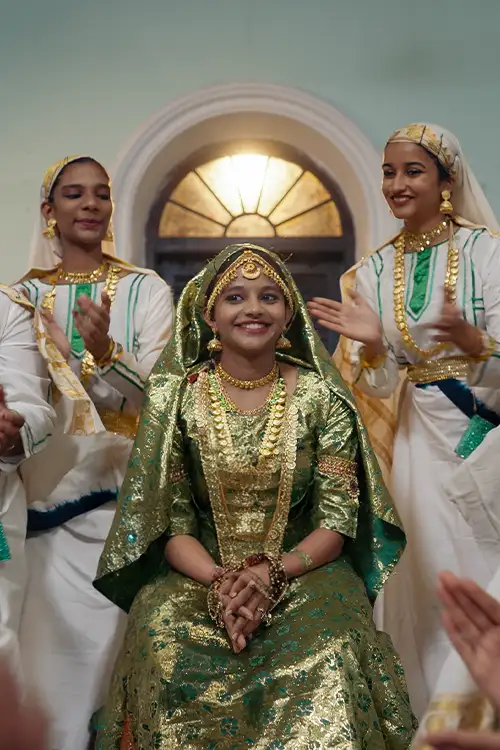
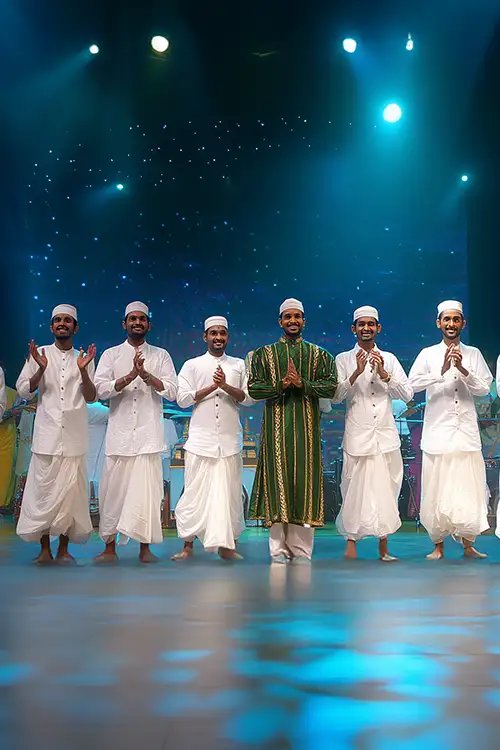
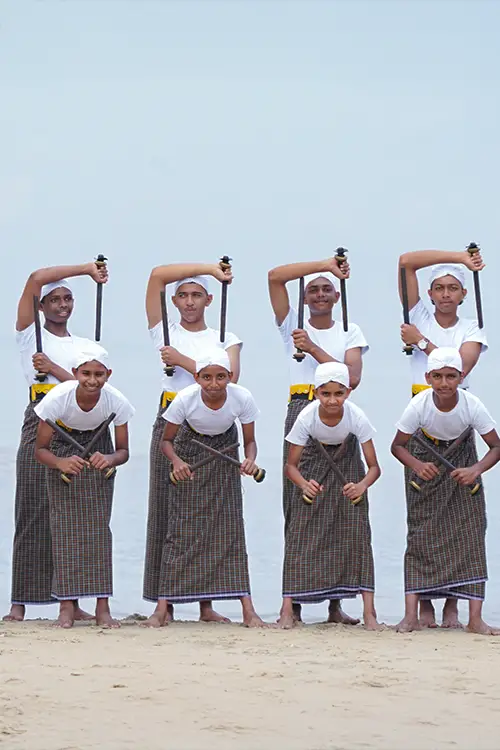
This performance is a ritualistic art form that combines elements of Malayalam and Arabic traditions. The term itself is derived from two words - 'Kuthu', meaning 'stabbing', and ‘Ratib’, referring to 'litany’. The performance involves the act of stabbing or piercing various parts of the body with knives and other sharp weapons while continuously reciting Arabic litanies and prayers. It is believed that this act is performed under the miraculous blessings of the Sufi saint Shaikh Ahmad Rifai.
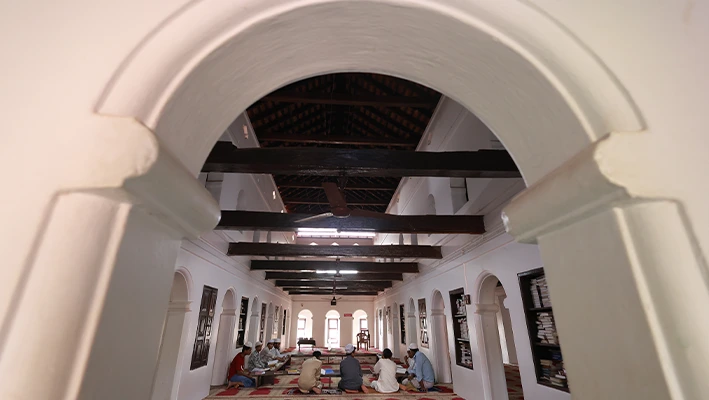
The ritual typically begins after the nocturnal prayers, performed in the glow of a traditional lamp. At the center of the gathering stands the teacher, surrounded by his disciples. The teacher leads the performance by singing eulogies dedicated to Prophet Muhammad and Sufi saints, with special emphasis on Shaikh Rifai. The disciples kneel before the teacher, receive his blessings through a handshake, and recite praises (salat) to Prophet Muhammad. This is followed by the recitation of the Fatiha, the opening chapter of the Qur'an, seeking the intercession of Sufi saints by invoking their names.
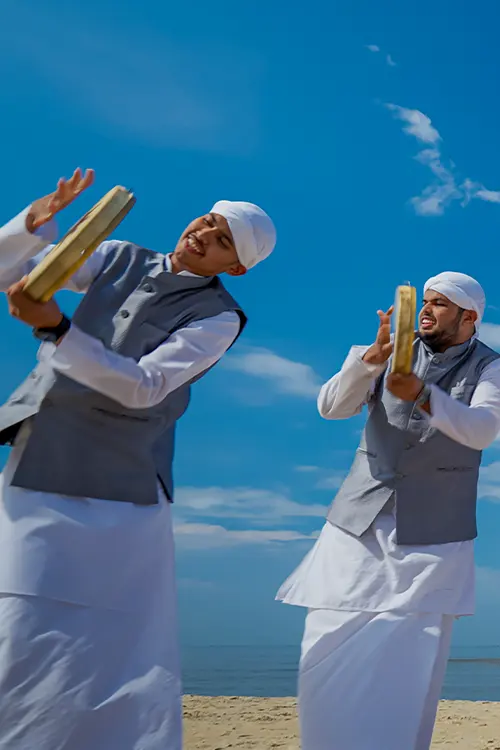
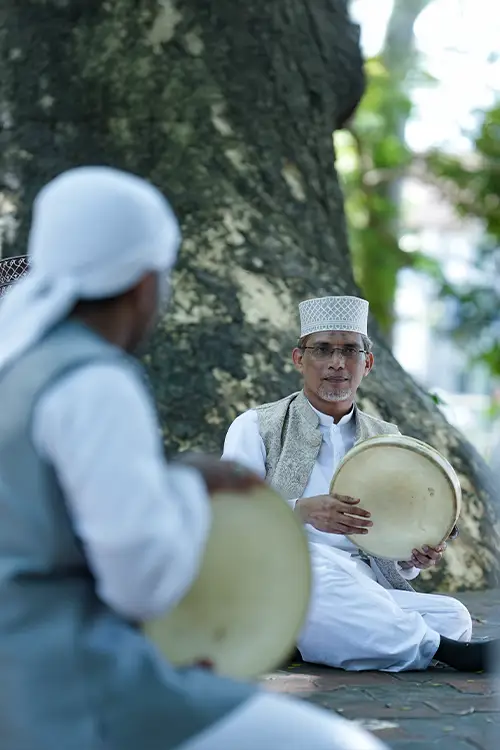
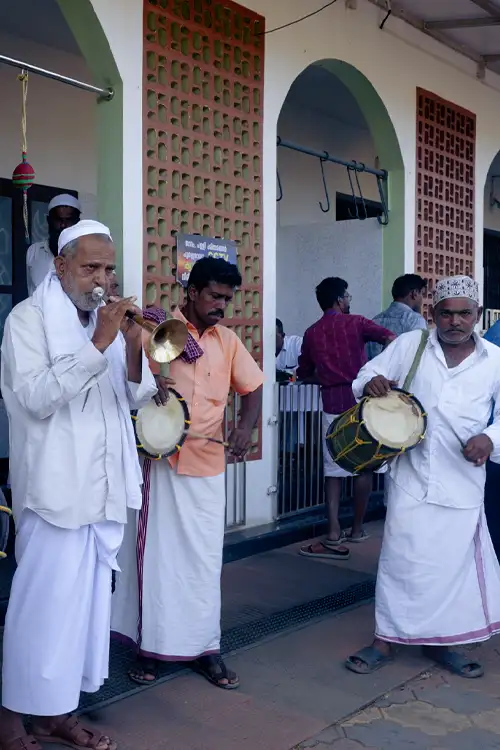
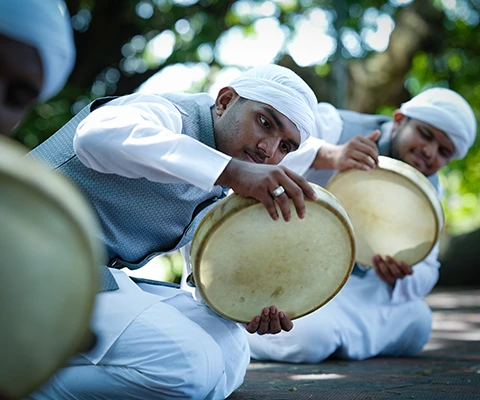
The ritual continues with rhythmic Arabana drumming while Arabic devotional songs from the traditional text Safeena are sung in praise of the Prophet. Between the songs, special prayers are made to Shaikh Rifai, repeatedly calling his name, "Yaa Shaikh Rifai". As the performance intensifies, the audience becomes enthralled and enters a state of heightened spiritual fervor.
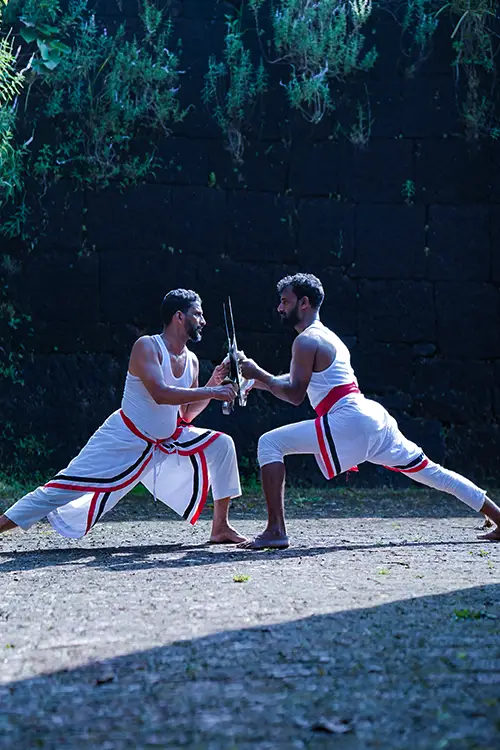
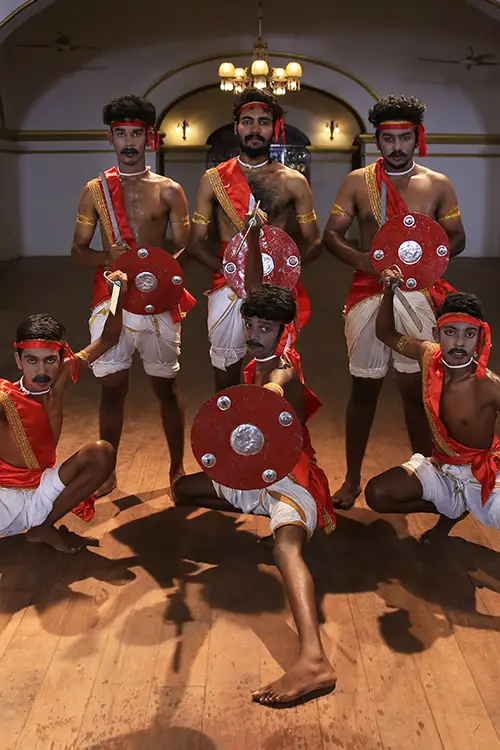
Amidst the chanting, one of the disciples steps forward and kneels before the teacher, who hands him a weapon. The disciple then loudly repeats "Yaa Shaikh" before jumping up and down, eventually inflicting wounds on his stomach. This act is followed by piercing a trident through the throat, tongue, and ears. The entire body is subjected to mutilation by knives and swords, all performed in a state of religious ecstasy.
Kuthu Ratib is not merely a display of physical endurance but a deeply spiritual practice rooted in Sufi mysticism. It symbolizes devotion, faith, and the transcendence of pain through divine blessings, preserving an ancient ritualistic tradition within the cultural landscape of Malabar.