Cheeni Muttu, also known as Muttum Vili or Varthiyam Muttu, is a musical play performed during festivals, particularly during the Urs celebrations commemorating the death of revered saints. The term ‘cheeni’ is derived from shahnai, a pipe instrument used in Persia, which in India is generally referred to as mangal vadya.
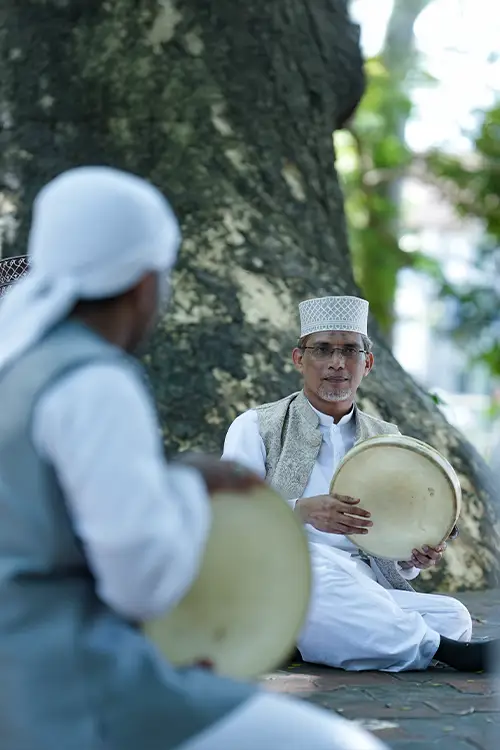
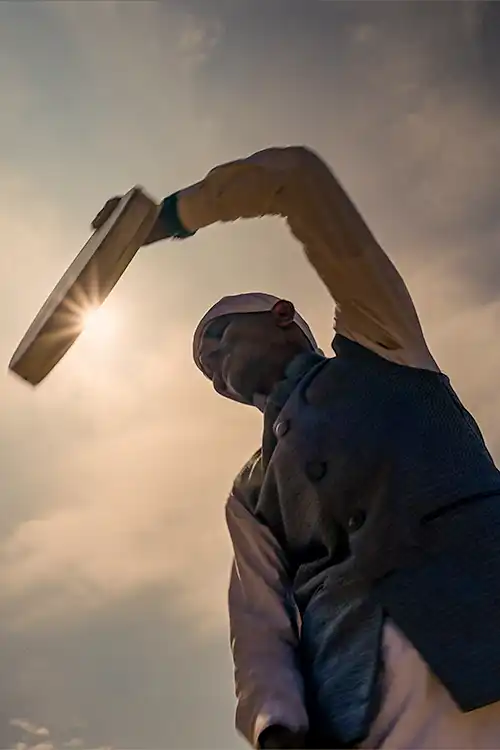
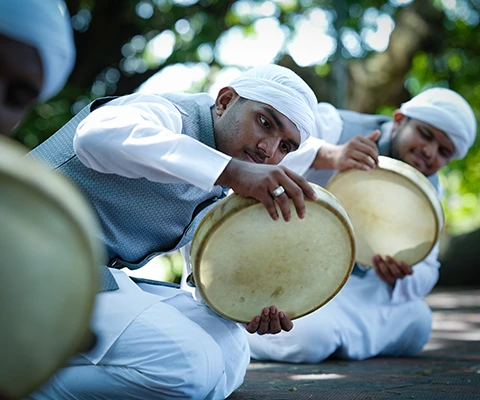
The cheeni is made of wood, featuring a double reed at one end and a flared bell, either metal or wooden, at the other. The upper end is narrow, while the lower end is broader. It employs a set of quadruple reeds, making it a quadruple reed woodwind instrument. Various tunes can be played on it by controlling breath modulation. The shahnai in Cheeni Muttu is accompanied by drums such as the otta and the smaller murash.
It is believed that the shahnai was introduced to Malabar from Persia along with Persian cultural influences. Over time, it was indigenized by incorporating native drums and performance styles. The tradition of Cheeni Muttu flourished in Kondotty, Malabar, particularly during the annual festival of Muhammad Shah Valiya Thangal. The Valiyakath family, who established this tradition, was once patronized by the Kondotty Thangals. They actively participated in the festival, from the flag hoisting ceremony to its conclusion.