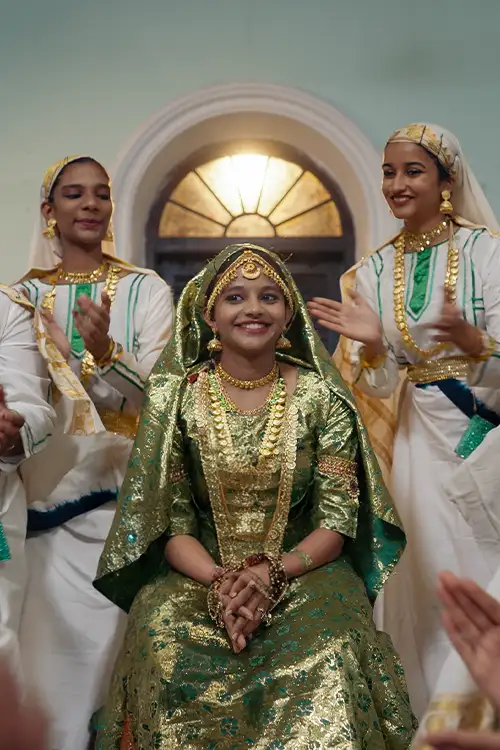
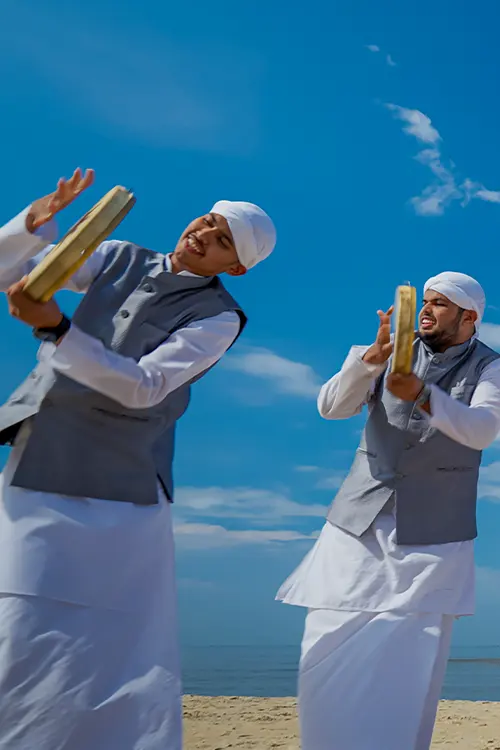
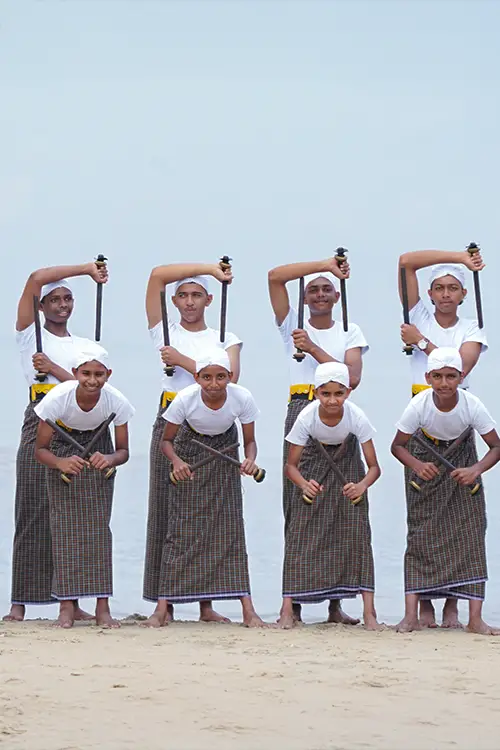
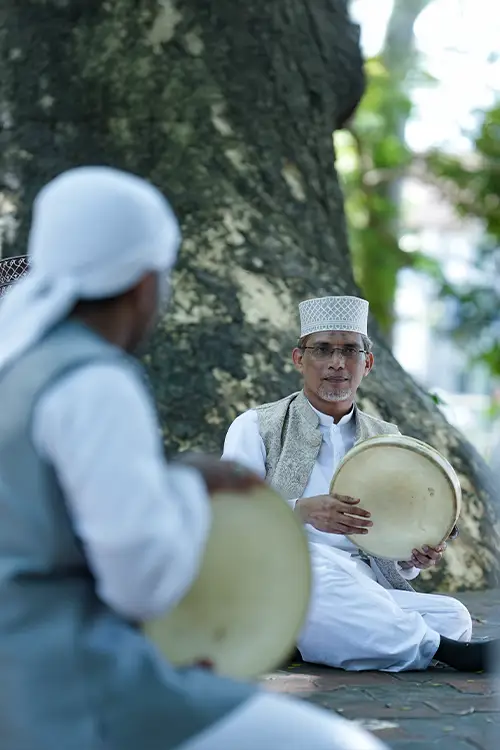
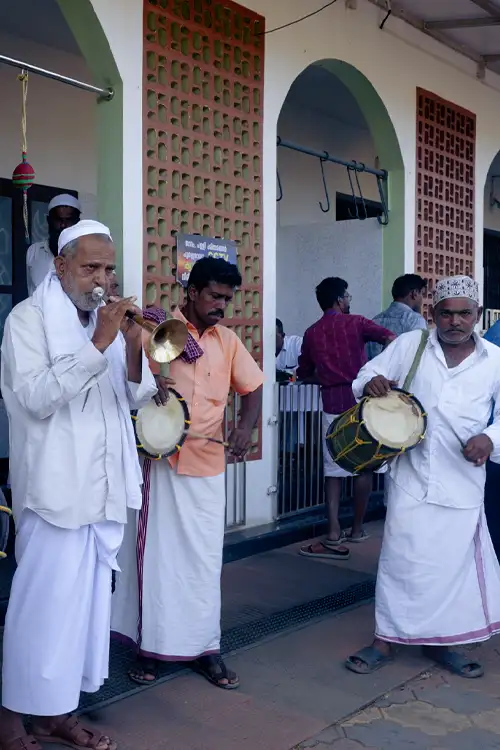
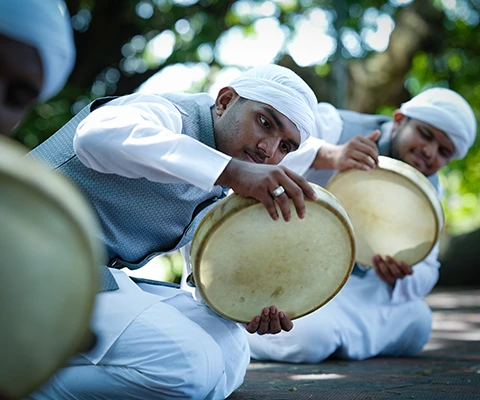
As the name suggests, Vattappattu is a traditional form of singing performed while sitting in a circle around the bride during marriage ceremonies. In this art form, both men and women form separate groups and sing, accompanied by simple percussion instruments. A spittoon (kolambi) is placed at the center, which singers rhythmically beat with a fan made from areca leaves, producing a distinct musical sound. The performance also involves synchronized handclaps and, at times, the use of cymbals. Occasionally, Vattappattu is organized as part of the wedding procession, accompanying either the bride or groom. Typically, there are eight to ten singers in a performance. Male singers are known as Kaimuttippattukar, while female singers are called Kalikkarathikal. This art form is also referred to by various names, such as Thollappattu (Throat Song), Mugathalappattu, Kolambippattu (Spittoon Song), Kalyanappattu (Marriage Song), Puthyappilappattu (Bridegroom Song), and Kaimuttippattu (Clapping Song). The event begins when the bride’s family welcomes the groom. The groom sits alongside the singers while a barber shaves his head and face, marking a ceremonial beginning. As this takes place, the singers start their performance. Once the grooming is complete, the groom wears his ceremonial attire and, accompanied by his brother-in-law, relatives, and friends, proceeds to the bride’s house. Along the way, Vaineelappattukar (roadside singers) join the procession. Upon arrival at the bride’s house, the elders of the bride’s family warmly receive the groom’s party with their singers. The performance begins with the bride’s family’s singers reciting baiths (Arabic devotional songs), followed by response songs from the groom’s side. This exchange of baiths continues as both groups warmly receive each other, exchanging greetings. The groom is then seated on a special chair (peetam) or ceremonial mat, with his singers positioned to his right and the bride’s singers to his left. The groom’s singers start the main performance with a welcome song. The sequence of songs follows a structured order: Munajath-an opening supplication, Virutham-a Tamil-style metrical verse, Salam Kavi-a Tamil-Arabic song welcoming the groom, elders, and guests, Kalyana Kavi-marriage songs celebrating the union, Chatta Kavi-another set of marriage-themed songs, and Mangalam-songs of blessings, addressing elders, the groom, and honored guests, etc. During Mangalam, the names of distinguished guests and elders are mentioned in the lyrics, prompting them to offer gifts. The songs are largely drawn from Tamil compositions by poets such as Abubakkar Pulavar, Alim Labba Hamza Pulavar, Gandha Pulavar, and Abdul Qadir Annaviya. In total, compositions from around seventy-two Tamil poets, including the Sufi singer Gunam Kudi Masthan, are featured in Vattappattu. Additionally, many poets from Malabar have contributed to this tradition, including Payyal Qayyath, Kadayikkal Moideen Kutty Haji, C.P. Muhammad, K.T. Muhammad, Ibn Ali, Vadakara, O.Abu, Abdu Razak, M.B. Muhammad, C.V. Abu, and K.T. Moideen. After the first round of singing, the groom’s singers pause to hear response songs from the bride’s side. The rule is that the opposing team must not repeat the same Ishal (melodic mode) or Virutham (metrical verse) as the first group. This exchange continues until one party fails to introduce a new melody or verse. The competition can last throughout the night and into the next morning. In some cases, neither side concedes defeat, leading to heated arguments, requiring elders to intervene and mediate a resolution.