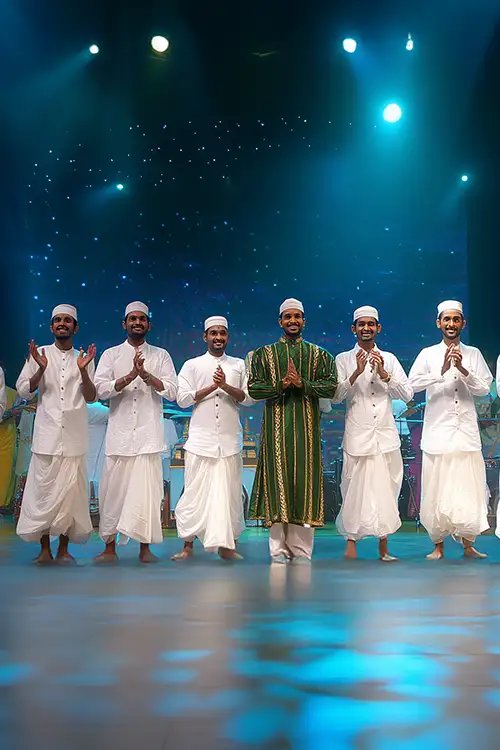
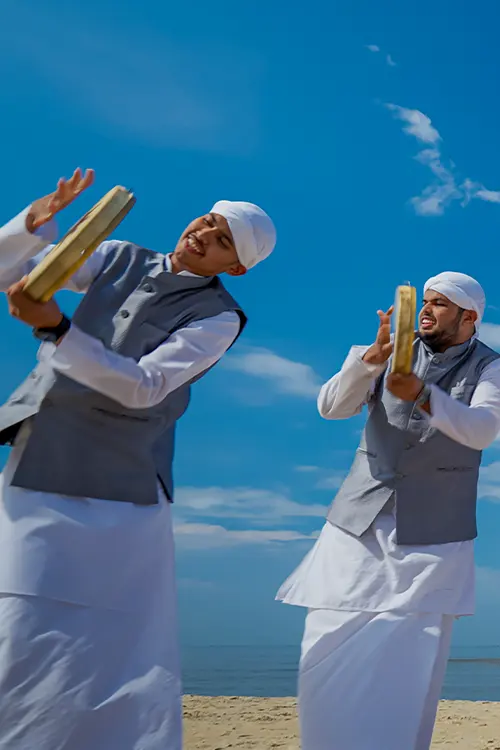
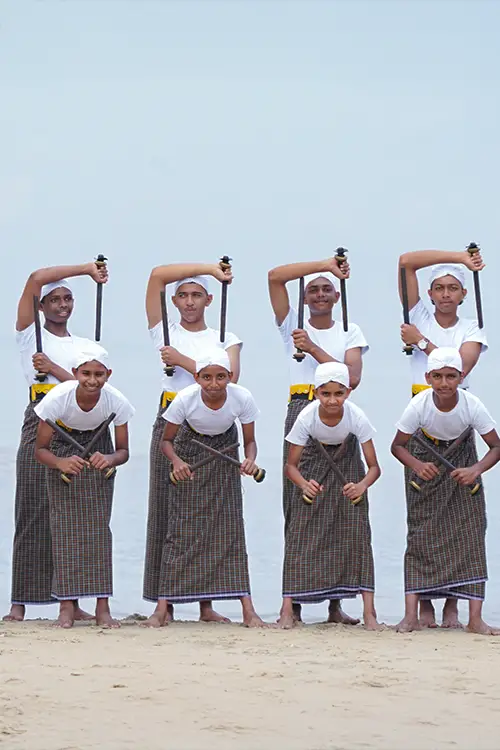
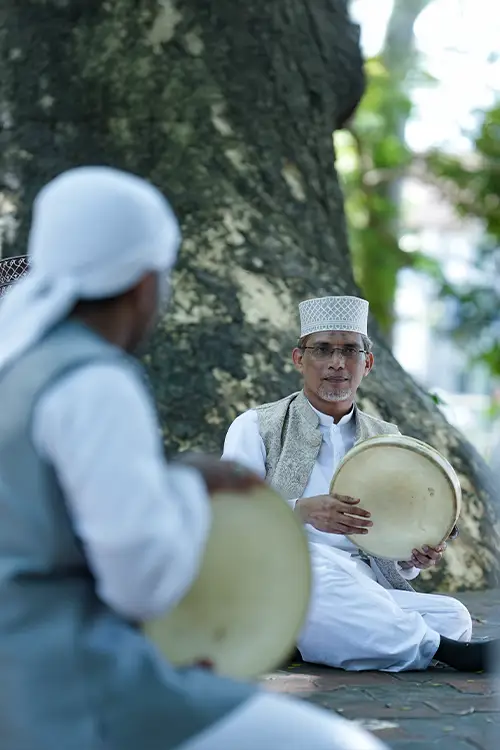
It is a traditional Mappila folk dance performed by women in a spirit of celebration during wedding ceremonies, circumcision rituals, and other significant festivities. It has now become a popular event in youth festivals. In Oppana, the bride is adorned with intricate ornaments, dressed in finery, and seated on an elevated seat called the peetam (ceremonial chair). Her friends and other young women dance around her in graceful, rhythmic movements while clapping to the beat of the song. The performance typically includes around fifteen participants, including the lead singer.
The dance is characterized by simple steps and elegant movements rather than vigorous actions. One participant leads the singing , followed by the dancers taking up the chorus in unison. The songs often involve playful teasing and humorous references to marital life, reflecting the bride’s emotions. Traditionally, Oppana is performed without musical instruments, though modern versions may incorporate the harmonium, ganjira, tabla, and elathaalam for accompaniment.
In earlier times, Oppana singers were known as Pattukarathikal (singing girls), and only those with melodious voices could become a Pattukarathi (singer). The trainers, referred to as Mooppathi or Karanothi, led the singing while others repeated the lines in a clapping rhythm. Oppana also featured a unique literary style and rhythm, with playful competitive singing, often extending into the next day. This tradition, known as Kampi Paduka (Singing in Modes), was a key feature of Oppana performances.
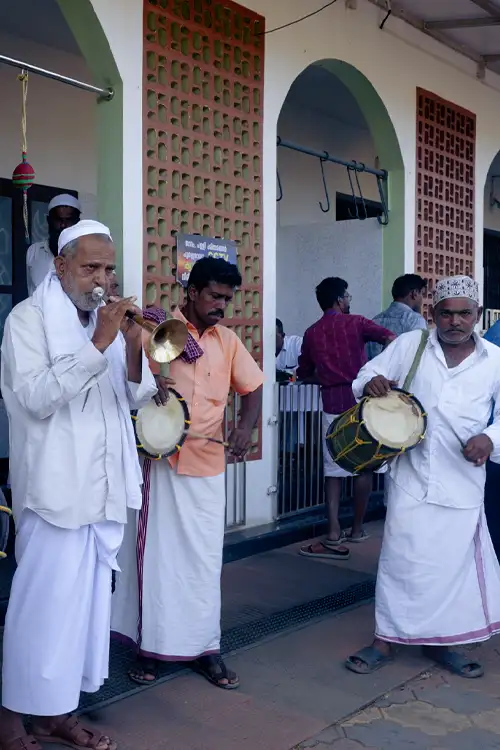
During Oppana, the singers and the bride wear traditional Mappila attire. The singers typically dress in a white dhoti (kachi mundu) with a violet-tinged border, a white shirt (kuppayam), and a silk-bordered scarf (thattam). At times, green shirts and dotted scarves are also worn. The bride and performers adorn themselves with traditional Mappila jewelry, including Ilakkathali, Karakkallu, Chankelass, Parannelass, Adippu, Kallumani, Mullamala, Chakkara Mala, Urukkum Thand, Thoda, Kazhuthil Ketti, Manikkathila, Chittu, Minni, Vala (bangles), Mothiram (ring), and Aranjanam (waistband).