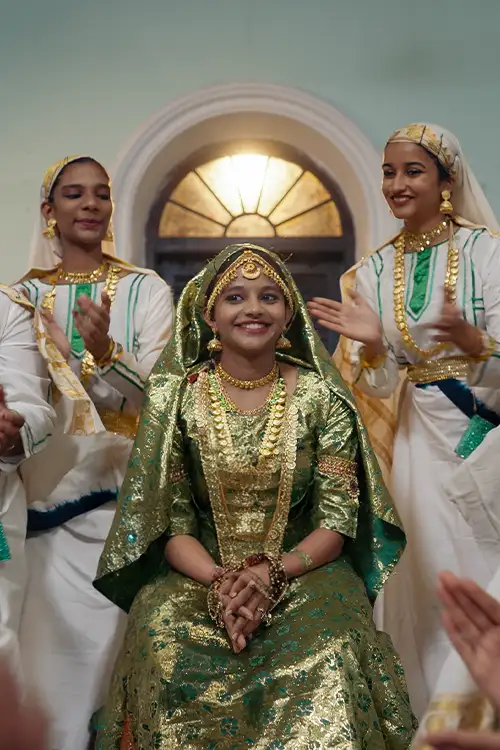
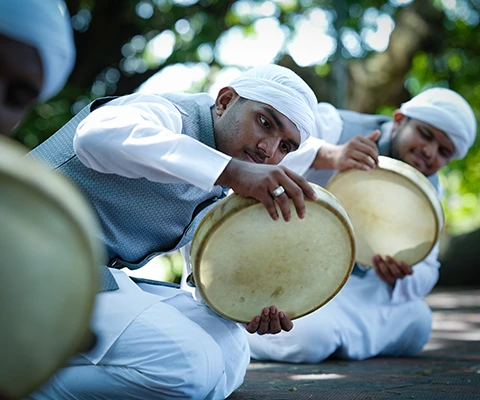
This is a traditional rhythmic performance, primarily played by teenage boys and girls using small duff instruments, while men perform with larger versions known as Arabana in Malabar. The duff is an ancient Arabian percussion instrument with deep cultural and historical roots. It is believed that when Prophet Muhammad entered Madina after his famous hijrah (migration), he was warmly welcomed by the girls of the city, who celebrated his arrival by beating the duff. Following the Prophet’s time, this art form was nurtured by Islamic scholars like Imam Malik and later spread worldwide through the influence of Sufi traditions.
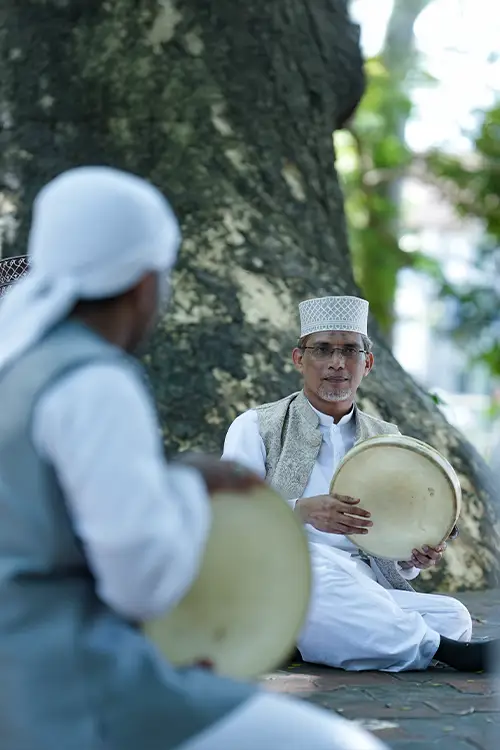
The duff is said to have originated in Persia, where it was called dap, a frame drum used in classical music with strong mental and emotional effects. The instrument varies in size - men generally play the larger version, while women use the smaller one. Duff Muttu is traditionally performed during celebratory occasions, with songs predominantly praising God and the Prophet Muhammad. The performance typically begins with Bismillah (in the name of God) and includes qasidas (odes) in honor of the Prophet, his family, and revered Sufi saints.
The beating of the duff follows the rhythm of the Arabic-style song, gradually intensifying in speed and force. As the performance reaches its climax, the players beat the drum alternating between standing, sitting, and bowing their heads rhythmically. The energy and tempo build to a crescendo towards the end, creating a highly immersive and captivating experience.
A typical duff troop consists of eight to ten players. The songs used in Duff Muttu are primarily Arabic, often drawn from the traditional Moulid compendium known as Safeenappattu. These recitations include supplications, praises, and blessings upon the Prophet Muhammad, his family, and Sufi saints. The rhythm changes in accordance with the song’s mode, with the beats becoming more vigorous as the performance progresses.
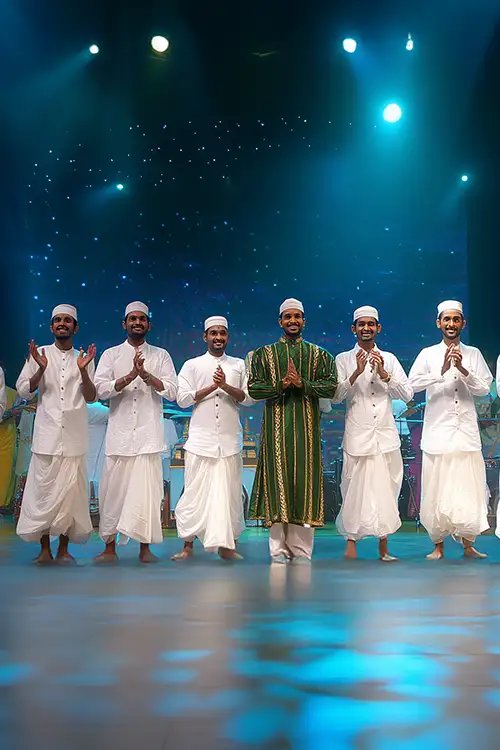
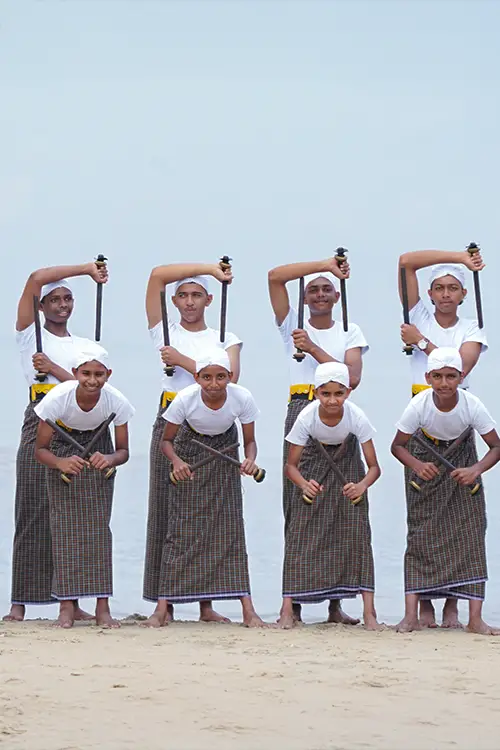
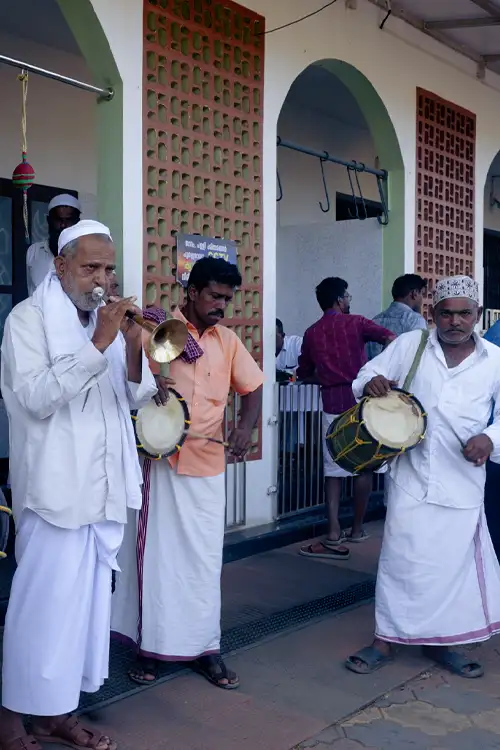
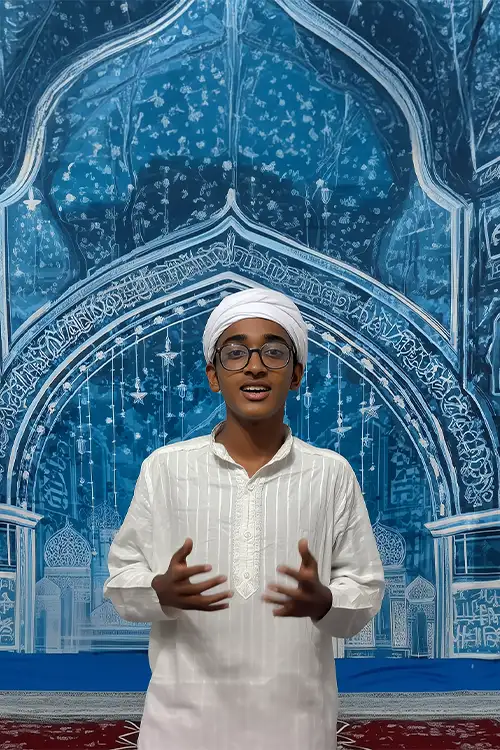
The performers of Duff Muttu follow a distinct traditional dress code: white dhoti (mundu), white shirt (kuppayam) and a turban made of white loincloth. This attire, along with the rhythmic intensity of the performance, adds to the visual and spiritual appeal of Duff Muttu, making it a revered and celebrated art form in Malabar and beyond.