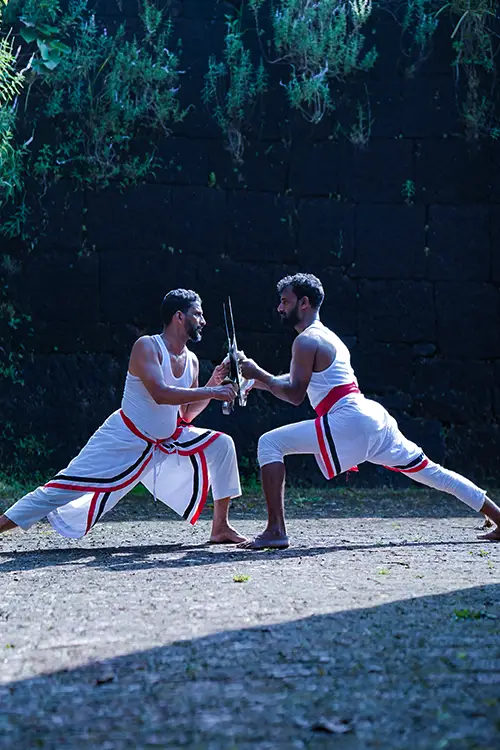
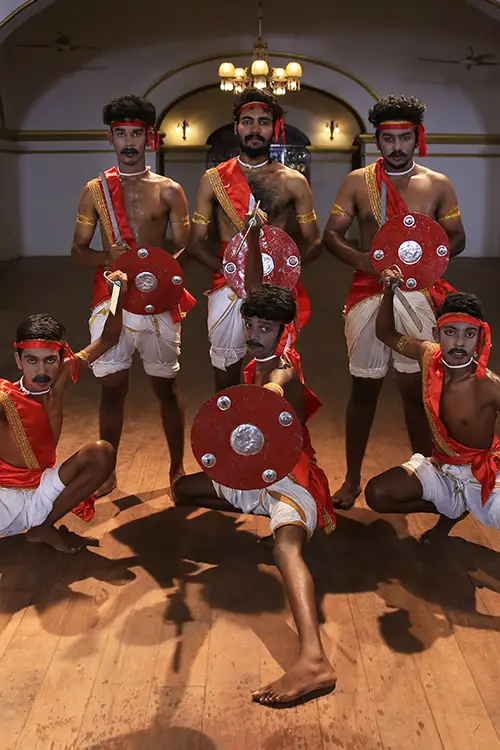
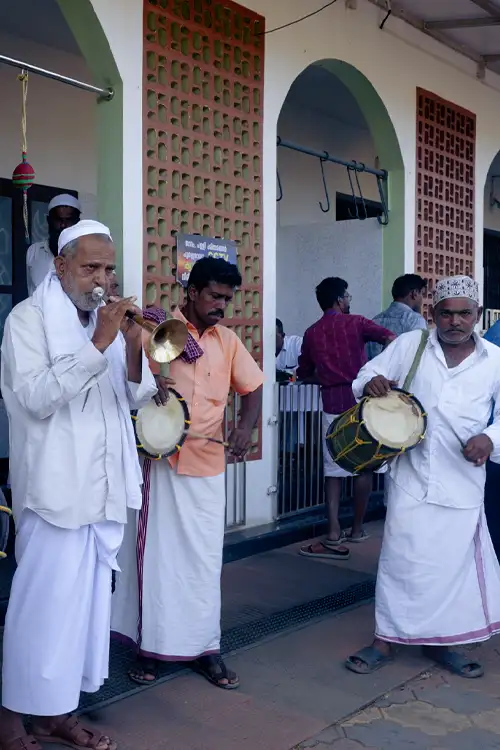
Kolkali is a traditional folk art practiced by both Hindus and Muslims in Malabar. Originally a martial art form, it was performed in kalaris (training schools for martial arts) under the guidance of gurus or masters. Over time, it evolved into a rhythmic group performance, blending combat techniques with artistic expression.
This art form is also known by various names, including Thekkan Kali (Southern Play), Vadakkan Kali (Northern Play), Thiruth, Payattikkol, Irupuram Mari, Nayar Kali, and Kambu Kali.
Kolkali is performed by a group of players who move in a circular formation, rhythmically striking small wooden sticks (kol). The performers maintain synchronized steps, expanding and contracting their circle as the dance progresses. The accompanying music gradually intensifies, reaching a climactic high point.
A novice in Kolkkali must complete five fundamental steps, collectively known as Anchadakkam-Marinjadi Milkadi, Cheruthalakkali, Munnottozhikkal, Ozhichu Kali Muttu and Marinjadi. For the successful execution of these five steps, sixteen players are required, as the rhythmic count is based on a sixteen-beat cycle. In Hindustani music, this rhythm is known as kerva (‘nage nathil nage dhinna).
Following Anchadakkam, the next stage is Payattikkol (also called Irupuram Mari or Kizhakkan Kali). This phase requires only twelve players and follows a different rhythm, known as dhatira (dhatin dhinna) in Hindustani music. Each stage of Kolkali incorporates distinct rhythmic sounds (vaythari), adding depth and complexity to the performance.
Typically, twelve players stand in a circle around the teacher (Gurukkal), who leads the performance. While the teacher remains unarmed, the remaining performers wield two sticks each, executing intricate movements in response to the teacher’s commands.
Over the years, Kolkali has seen innovations introduced by renowned masters and trainers, including Chaliyam Kunhi Muhammad Kurikkal, Bichikkoya Kurikkal, Abdu Kurikkal of Feroke, Mammad Koya Kurikkal of Kozhikode, Imbichikoya Kurikkal of Chaliyam and Edarikkode Alikkutty Kurikkal. Their contributions have helped preserve and evolve Kolkali, ensuring that this unique blend of martial art and rhythmic performance continues to thrive in the cultural landscape of Malabar.