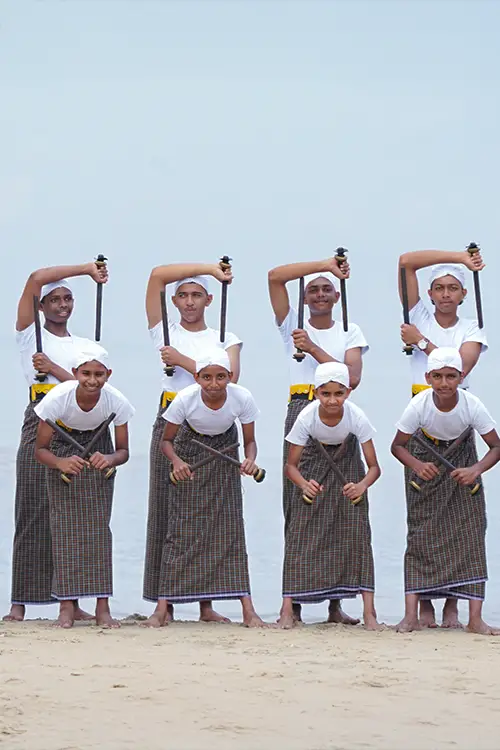
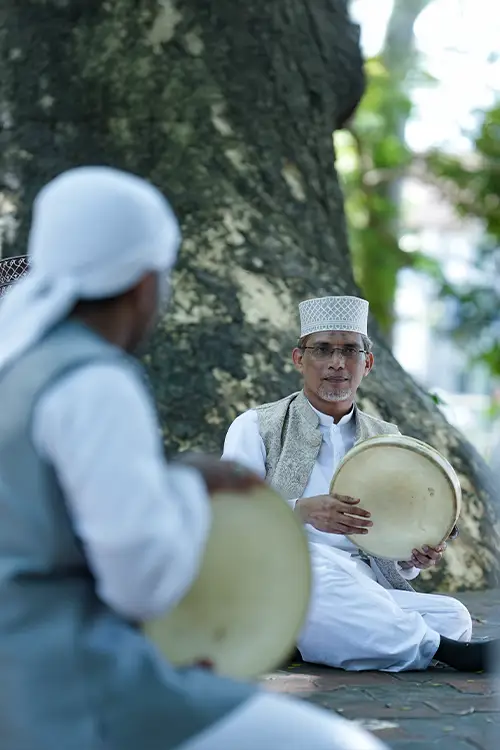
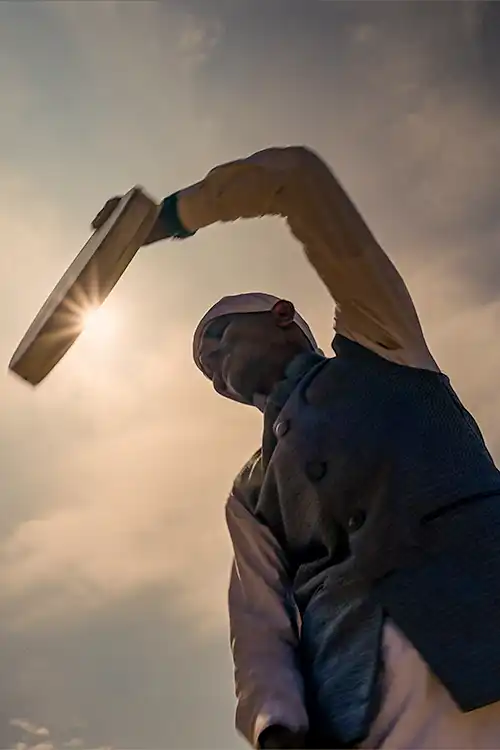
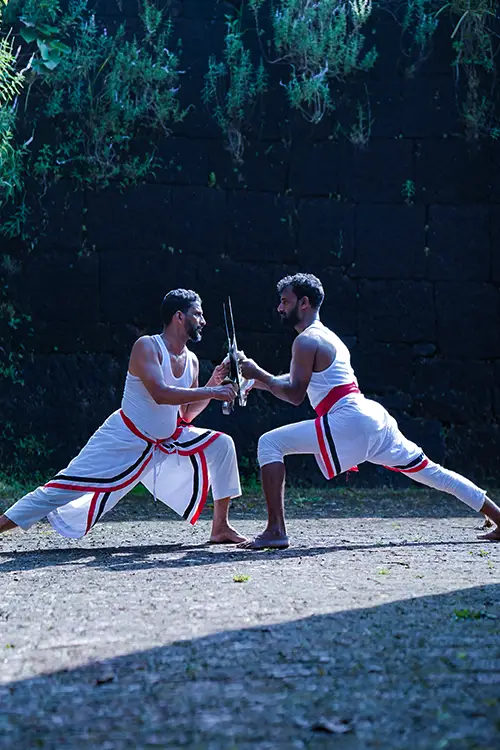
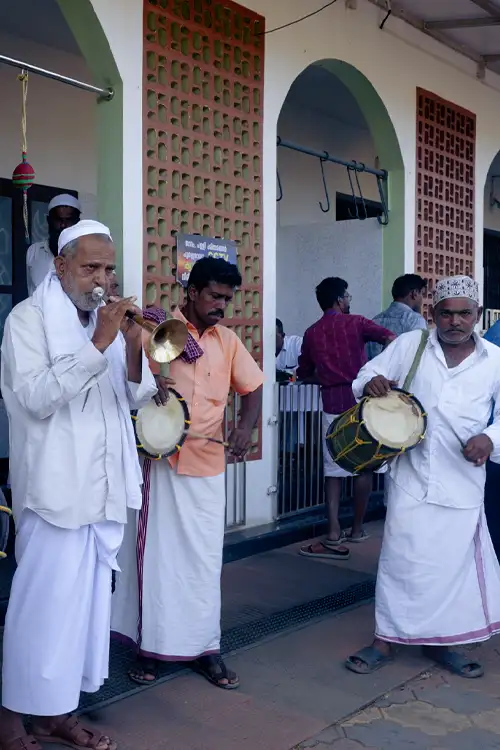
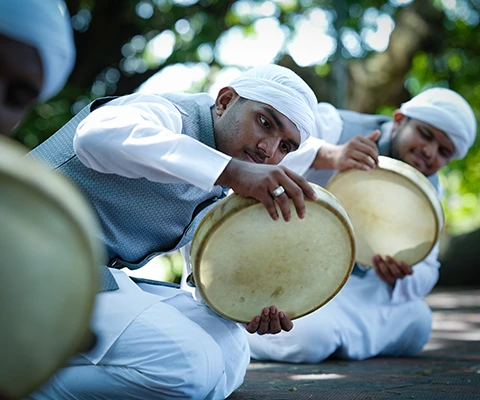
This performing art is closely related to Kalarippayattu. Its origins can be traced back to ancient times when Kalarippayattu was widely practiced. The play is performed by men, following the same steps used in Kalarippayattu. A similar form of this art is also performed by the Christian and Jewish communities of Kerala.
The term ‘paricha’ means shield, which is a key element in battle. This play involves twelve players, with wooden shields and swords as the primary instruments. The steps are known as Chavittu Kettu, Mukkanni, etc. No musical instruments are typically used, though some performances include cymbals or elathalam. A distinctive feature of the play is the rhythmic clashing of swords and shields, producing a unique and exhilarating sound.
The guru or asan (trainer) stands in the center, guiding the players by maintaining rhythm. The performance begins with prayers to God and tributes to prophets and divine figures. Arabi Malayalam songs with special lyrics accompany the play, adding to its traditional essence.