|
| Beyond the Beach Tour at Kovalam - The Program |
|
 |
| |
|
|
| |
The trip is scheduled to start from the Tourist Information Centre at Kovalam by 9.00 a.m. after a briefing session about the trip. The journey can be organized either in a car or in an auto rickshaw
Spot 1
Sree Krishna Temple and flower shop
Our journey through Kovalam coastal village starts from Sri Krishna temple, where the idol was believed to have be erected and consecrated by a woman ascetic called Bharathi Amma. There is a myth connected to the establishment of the temple here, which goes like this: The inhabitants of this area were experiencing insecurity as the land along the sea line was experiencing serious soil erosion and other problems. It is believed that the consecration of Lord Krishna's idol has resulted in bringing back the peace and prosperity. And today, the villagers begin their daily chores after a visit to the temple.
Just a few steps ahead, we can see a flower shop and such shops are quite a common feature in the vicinity of temples in Kerala. And what attract us here are the variety of flowers and other materials used for making different garlands and the exquisite skills of garland-making will also be on display. Such garlands are offered to the temple as a sign of devotion. Amongst many flowers used for garland-making the most popular ones are Arali (Nerium), Mulla (Jasmine), Pichhi (a kind of Jasmine) and they are delicately woven with Tulasi (the holy basil) leaves. You can lend your hands in garland-making with the help of the workers in the flower shop.
Spot 2
Coconut trees and Home garden
Turning to the next leg of our journey, our orientation will get shifted towards exploring the traditional village life of Kerala. Kerala is the land of coconut trees and the word 'Kera' in Kerala stands for the coconut tree in the local language. The most interesting feature of coconut tree is that there is hardly any part of the tree that is left unused. When the coconut leaves are used for thatching the houses and for making fences, its trunk is best suited for construction and shoring works. Coconut itself is used for cooking purposes whereas the tender coconut water is used as a refreshing energy drink and the dried kernel of coconut is used to make coconut oil, which is a preferred medium for cooking purposes. The dried coconut shells are used as an alternative to firewood and its fibers are used to make coir and coir products such as mats, furnishing items etc. Most of these practices can be seen and experienced here in the village.
Our next stop is Gomathi's house and her house resembles a typical Kerala house made of clay bricks with thatched coconut leaves. It will be very interesting to observe the art of weaving the coconut leaves and here you can also find an incredible opportunity to try your skills with coconut leaf weaving. Our host Gomathi finds her living out of such neatly woven coconut leaves. Her house and immediate surroundings might evoke interest in us as it ensembles the much discussed 'Kerala home gardens.' In around 7 cents of land available, Gomathi and her family rears a wide variety of plants and trees like teak, asoka, kanikonna, mahogany and fruit- bearing trees like jackfruit, mango and alongside she rears flowering plants like anthurium, hibiscus, jasmine and medicinal plants like tulasi (basil), aloe vera, etc. The home gardens of Kerala are a vanishing heritage with significant cultural values and were considered to be a symbol sustainable living.
Further ahead in our journey, we will reach the coir-making unit for women.
Spot 3
Coir-making Unit
This is an industrial unit meant for women, specializing in the manufacturing of coir and coir products. And what we get to see here is not only the diverse and detailed process involved in coir manufacturing, but the social association, which binds the women-folk for their livelihood needs. An elaborate exercise; coir and coir product-making involve several steps starting from the beating up of the coconut husks, which act as the raw material. Such beaten husks are then allowed to decay in water for some period (6 months) before the fibers are extracted. Using the indigenously designed machines these fibers are woven together to make coir and largely women-folk are involved in this activity.
This coir-making society is in existence for the last 12 years with working hours spread between 9.00 a.m. to 5.00 p.m. every day and holiday on Sundays. Depending on the availability, husks may cost between fifty paise to one rupee. This unit manufactures different handicrafts and value-added products like mats, etc out of coir.
Having received an exposure on coir-making as well as community empowerment, our journey continues for our next stop at the Thanal Zero-Waste Centre.
Spot 4
Thanal Zero-Waste Centre
The Thanal Zero-Waste Centre at Kovalam is an initiative intended for tackling the issue of waste generation and aims at a Kovalam with less / no waste. Zero-waste project tries to address the issue of waste management through a series of activities including recycling the wastes by converting them as useful and attractive objects. Working in different departments, the centre converts different types of waste; be it cloth, paper or hard substances and converting them into products of daily use or with incredible showcase value. This centre has another remarkable distinction of a unit fully managed by women. Understanding the abundance of coconut in the region, the centre has got a dedicated section for making products from coconut shells, fibers and other parts. This ethical, economical, and efficient way of recycling the waste helps in waste management and also as a source of income generation also.
The project in the beginning had 13 members and in due course has grown into a bigger organization. The centre in its growth has established a strong market linkage and some of the recognized hotels and tour establishments started giving direct orders for various items. It has a range of products that include items like paper bags, files, table tops, cloth covers etc. and custom-made souvenir items are made and distributed to many leading hotels in and around Trivandrum like The Leela Kovalam, Hotel Mascot International, Hotel Samudra etc. At the display-cum-sale centre attached to the centre, we can see the varieties of products offered by Thanal and we have the option to buy things of our choice as well.
Spot 5
Visit to the Sree Neelakanda Anganwadi (Crèche)
The next place of visit item in our travel itinerary is a visit to the Sree Neelakanda Anganwadi (crèche), which is a government-run primary learning centre for kids below 6 years. Every child usually gets his / her primary education from anganwadis. The Neelakanda Anganwadi that started in 1983 also acts as the nodal centre for the implementation of various schemes of the government meant for the development of children and women. The Anganwadi now has strength of 15 children (10 boys and 5 girls) and supported by two teachers and one helper. During our visit here, we have the opportunity to interact with the children.
The trip now leads us to the next destination, one of the bustling local markets in the region named Mukkola.
Spot 6
Mukkola market
Markets occupy a special place in any society, be it rural or urban and these markets acts as the lifeline for the local populace. Arriving at the Mukkola junction, we will be able to get the feel of a typical Kerala rural market with an array of shops and the fish/vegetable market lying ahead, which becomes active during the day hours. It is such a unique experience to see the assortment of products on sale, which ranges from different fish varieties to vegetables and other items sourced from far and wide. Another stark feature that you may observe here is the sheer number of women-folk who handles the business and the special business acumen that they show while dealing with their customers. We can see how skillfully the women are selling vegetables, fish, brooms and baskets. Here, we may come across the neatly crafted baskets, mats, etc. made from rattan reeds and palm leaf. Such products are bought from its point of manufacture, which lie between Kerala and some parts of the adjoining state of Tamilnadu, which are sold at the local market. A visit to the market provides us a special opportunity to observe and learn the multitude of activities occurring in a limited area with the diverse involvement of its participants, who are the sellers and the buyers and also how the transactions take place after series of dialogue and sometimes friendly as well as aggressive confrontations too.
Spot 7
Forge (aala)
Right next to the market we will come across an aala (forge), where different metal items are manufactured. This aala represents a bygone era where almost all the tools and implements were made through traditional methods. In the orthodox metal forging technique, charcoal is used as the fuel to light the hearth for heating the metal and tongs are used to hold the work piece. There will be anvil and hammer to beat and shape the tools. Establishments like aalas have played a crucial role in mankind's stride for progress and it's to be considered as a cultural symbol of our bygone era.
Spot 8
Traditional Fish traps (raalkoodu)
The next item in our itinerary is a visit to Raju's house. The visit is intended to reveal us one of the unique and special artifacts, the raalkoodu (a traditional fish trap) which is used for catching lobsters. What makes Raju so special is the fact that he belongs to the few, who had mastered the art of making raalkoodu. Raju can demonstrate the art of making the raalkoodu with all the details involved in its making. Lobsters are one of the most expensive fish found mostly in the deep sea. It involves spectacular skill and hardship to catch them and raalkoodu acts as the special trap used for this purpose. There are three types of lobsters that are caught here: They are pulikannan - the heaviest of all (about 2.5 kg), Columbus (about 1 kg) and the Chemraal (about 1 kg). The taste and the price of these lobsters may vary between each variety.
The raalkodu mode of capturing lobsters is practiced only in Kerala. The traps are placed near the side of rocks under the sea by expert swimmers. The trap can be adjusted in such a way that only big fishes are trapped and small fishes can escape. This is why it is considered as an eco-friendly model. This method is used in the months from August to May as the lobsters are in plenty during this period of a year. The lobsters normally cost up to Rs. 800 per kg.
Working of a raalkoodu is mentioned by Raju. There are three parts in a raalkoodu: the top, the bottom and a gate. The same trap can be made out of iron, but it rusts over a period due to saline sea water and is expensive. The natural fibre raalkoodu can be used for one month and it is less expensive. It takes only one hour to build one and five of such kind can be built in a day.
The indigenously designed traps for catching the fish are a thing of immense interest.
Spot 9
Y.D.M Kalari
Next we walk into the world of Kalarippayattu, the ancient martial art form of Kerala. It is the martial tradition of self-defense practiced in Kerala and it has its roots deep in the Vedic culture of India. Kalarippayattu is possibly one of the oldest fighting systems in existence and it includes strikes, kicks, grappling, preset forms, weaponry and healing methods.
YDM Kalari was formed in 1980. Urumipayattu, vaalpayattu, karuvadipayattu, kalaripayattu, neduvadi payattu etc are the different types of kalari techniques. The commonly used weapons are sword, knife and stick. At the Y.D.M. Kalari, one can witness the practice sessions every Wednesday and Sunday at 7.00 p.m.
Spot 10
Traditional canteen
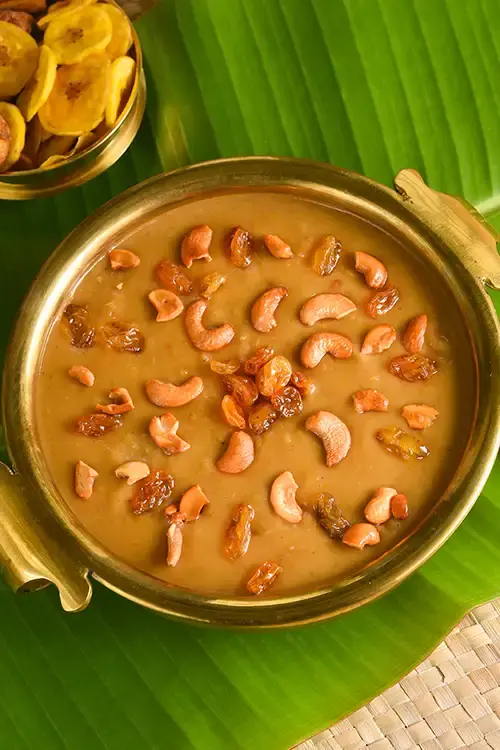
Our tour continues and next in line is the food zone; to know and feel the taste of traditional Kerala food. Different types of traditional food can be had from the canteen in the village. Here, we are served with a sumptuous lunch with boiled rice, sambar, aviyal, koottukari, pickle, papad, thoran, rasam, payasam that are served on a plantain leaf; all part of a traditional Kerala meal. Sadya (traditional feast), tapioca and fish curry can be ordered here. Instead of using readymade ingredients, natural products are used in food items. Wood is used for lighting and cooking.
Spot 11
Handicraft units - Kathakali mask
Our visit to the handicraft units would help us in having a close look at the handicrafts by women groups in this area. The main item of their production is Kathakali mask. Kathakali is a highly stylized classical dance-drama of Kerala noted for its attractive make-up of characters, their elaborate costumes, detailed gestures and well-defined body movements. The wastepaper from the press is recycled and used for the preparation of Kathakali masks. The paper is dipped in water for about one month and powdered. The paper pulp, chalk pieces and gum from tapioca is mixed and dried. Then flour is added and dried. It is polished using sandpaper, colours are added and then tags put on its backside to complete the mask production.
Spot 12
Handlooms
It is really fascinating to see the handloom weaving of the cloths using silk and fine threads of gold and silver. The clothes are made out according to the needs of the customers. The embroidery designs are really marvelous and mostly golden borders are used for clothes. Wearing these clothes on marriage and other functions is part of the traditional style. The price of the handloom clothes range from Rs. 1,500/- to about 1.5 lakhs, depending on the designs and quality. The handlooms are supplied to the major showrooms and textile shops in the city.
No women are working in this field. One month is needed to weave a saree and one saree is weaved by a single person. People who have received the national honour - Padmashree are also working here.
Spot 13
Fishing activities in Vellayani Lake / Farm walks
Our voyage to explore the life beyond the Kovalam Beach marks an end with demonstration of traditional fishing at Vellayani Lake. Guests can try angling and also try their hands at some traditional fishing operations. The banks of the lake offers perfect ambience to sit and relax for sometime. This place covers 70 hectares of land filled with greenery. The lake is rich in a variety of fishes and migratory birds. It is a favourite haunt of birds like herons, egrets, kingfisher, eagle, woodpecker etc. Different varieties of lilies and lotus can also be seen here. Before a decade the water from the lake was used for irrigation. The Vellayani Lake is indeed a great advantage to the farmers. |
|
|
|
|
| |
|
|
| |
|
|
|
| |
|
For travel related requirements like accommodation, hotels, tour packages, transportation, info on healthcare and other travel related assistance please click here.
|
|
|
|
|
|
|
|
 |
 |
| Videos |
 |
 |
 |
| Photos |
 |
 |
 |
| Maps |
 |
 |
 |
Information
Offices |
 |
 |
 |
Message
Board |
 |
 |
 |
| Souvenirs |
 |
 |
 |
| Newsletter |
 |
|
|
|